Welcome!

Are you a gamer? Want semi-expert opinions on new and old games both popular and overlooked? Then this site is right for you!

Thursday, August 1, 2019

BioShock Review

BioShock
Publisher: 2K Developer: Irrational Games Platform: PC Release: 2007 Genre: First-Person Shooter / Horror Players: 1 Rating: 9.3 \ 10.0: Outstanding
Image result for bioshock gameplay
Above is the player fighting a Spider Splicer using Plasmids


Of the many great games released in the past couple console generations, few are as lauded as BioShock.  It's a game rightfully praised for its interesting setting and iconic moments, and although I would not consider it amazing, it has held up strongly over the past dozen years for a wide variety of reasons.

BioShock's opening few minutes are among the most memorable I have experienced in a game. It b begins with a plane crashing into the ocean, with a large large tower in sight as you take control and swim through the wreckage. You enter this tower and are presented with a bathysphere which lowers you deep into the ocean. A projector then begins playing a monologue from Andrew Ryan alongside an excellent orchestral, who explains that Rapture, the massive underwater city you see before you was created by him for the purpose of allowing society's greatest minds to escape the grasp of the world's governments and be entitled to the rewards their hard work deserves.  As you immediately find out upon exiting the bathysphere, this plan to create a utopia has utterly crumbled, as Rapture is falling apart and is infested with viscous Splicers, former citizens of the city whose minds and appearances were warped by the abuse of gene-altering drugs which grant superhuman abilities called Plasmids. You are quickly contacted by Atlus, who explains that his family is trapped in a submarine somewhere in the city and asks if you would kindly assist him and saving them so you can all escape the underwater hellscape, thus beginning a memorable journey.

BioShock's gameplay is relatively simple. You explore sprawling levels with a set objective, encountering all sorts of splicers along the way. It's not a strictly linear game like many of the games in its genre, but it's not an open world, either. You can always simply choose to follow the quest arrow right to your objective, but exploring the many areas that you're never required to set foot in will reward you greatly with more money, ammo, and potentially gene tonics, which are small perks that can increase your proficiency in combat, improve your physical traits, or make hacking easier. You will encounter many security systems and vending machines in each area that can be hacked through a simple but fun mini game in which you click on tiles on a grid to reveal pieces of a pipe that you must put together to form a complete path from one side of the grid to the other, all while water flows through the incomplete pipe, thus pressuring you for time. Although I did enjoy this mini game, it got a bit dull and repetitive by the time I was nearly finished with the game's nearly 15 hour-long campaign, and on very rare occasions I would be faced with a pipe that simply could not be completed due to the flaws with the random generation of the tiles in the mini game.

Combat consists of switching between a decently sized arsenal of weapons each with alternative ammo types, such as a Tommy gun and crossbow, and your Plasmid abilities such as the ability to shoot lightning bolts, fling fireballs, summon hordes of bees, and tricking security bots into targeting Splicers. Your health is fixed and can be restored with first aid kits that you can only carry a handful of, and using Plasmids consumes Eve, which can be restored by collecting syringes of the substance. The game may seem to have some survival elements at first, but by the end of the game, I had plenty of ammo for every weapon and was almost never short on first aid kids or Eve syringes, even on the highest difficulty mode. I almost wish that the game forced me to be more conservative with my resources on Hard mode, as I never enjoy having to handicap myself in a game to get more out of it. The weapons don't feel amazing to use, but the wide variety of Plasmids and gene tonics kept combat fun and interesting throughout the whole experience. Expanding my aresnal as the game progressed was very satisfying, but the enemies I faced unfortunately did not step up their game nearly as much, causing the last couple hours to be easier than the first few, but still far from boring.

BioShock excels in both the audio and visual departments and creates a setting that, as unrealistic as it may be, is incredibly engrossing and well realized. Even today, the game's visuals have aged remarkably well on both a technical and artistic level. The textures are intricately detailed, lighting is used excellently to create suspense and horror, and the intricately designed areas are full of well thought-out props that help sell the setting and sometimes make for excellent environmental storytelling.  When it comes to visuals, my only real complaint is that the bloom effects can sometimes be intense to the point of becoming mildy obnoxious. Sound design is another strong suit. Almost all of the game's jingles and sounds are firmly engraved in my memory, from the voice lines that play fro the various vending machines to the buzz of an active security bot to the groans of  a distant Big Daddy. Other small details such as the disturbing ramblings of nearby Splicers further enhance the atmosphere. The game's original soundtrack is used sparingly, but is usually reserved for the many scripted moments of horror, and, while not particularly memorable aside from the track that plays during Ryan's opening monologue, serves its purpose well. Licensed music is also used to great effect. The lighthearted songs from the '50s that play in many of the game's abandoned stores create a somber tone by contrasting with the horrific destruction and, when paired with the many areas that are damaged but not completely destroyed, causes me to envision what Rapture may have been like in its prime.

It would be remiss of me not to mention BioShock's audio diaries, a feature that did not originate from this game but was popularized by it. While the idea that numerous people would choose to record their thoughts on devices only to frequently leave them lying in the middle of public places is a silly one, I am willing to suspend my disbelief for the sake of enjoying these logs that make the setting of Rapture even more interesting. Most of these audio logs are entirely optional to look for, but are well worth listening too for the fascinating insight they provide on the philosophies and motivations of the various interesting characters you meet in each area such as Andrew Ryan, Brigid Tenenbaum, a scientist who formerly worked under Ryan, and the crazed artist Sander Cohen. Many of the logs also shed light on the reasons that the city is in its sorry state.

There is another trend that was somewhat started by this game, one that I am not particularly fond of, and that is binary moral choices. Each of the game's main areas is home to several Little Sisters, young girls who have been genetically altered for the purpose of harvesting Adam, the substance used in Plasmids and gene tonics to alter genetic code, from the corpses of Splicers. They are guarded by Big Daddies,  mysterious behemoths in diving suits. Fighting them can be a significant drain on your ammo reserves, but finding creative and quick ways to kill them by using the using the environment to my advantage with Plasmids like Telekinesis often made for a good time. Upon defeating a Big Daddy, you will have the option to either harvest or rescue a Little Sister. The latter option turns them back into normal girls, while the former kills them but rewards you with more Adam than saving them does, but prevents you fro achieving the good ending. Adam is used to unlock new Plasmids, upgrade the ones already in your arsenal, unlock new gene tonics, and increase the maximum number of tonics you can equip, so this is a hard choice in theory. However, you receive periodic gifts from the Little Sisters if you choose to spare them all, and these more than make up for the  lost Adam, and even when playing on Hard mode, I had so much Adam near the end of the game that I wasn't sure what to do with it, and I didn't harm a single Little Sister to obtain that amount. Ultimately I can't get too mad at this basically meaningless choice because it didn't directly impact my enjoyment, but it did inspire a generation of games to include similarly pointless or obvious choices.

The highest point of BioShock is its narrative twist that occurs about two thirds of the way through the game. This scene has become so iconic that it is likely that many reading this are already aware of what I am referring to regardless of whether they have played the game yet, but I wouldn't dare spoil it for those who aren't already in the know. It's an excellent moment that brilliantly betrays the idea of player agency and defies what players have come to expect from the vast majority of shooters. I'd argue that BioShock is worth playing just to witness this, because the true impact of the twist cannot be fully felt without having investment in the game's plot. Unfortunately, the same praise cannot be given to the game's good ending, the one that most players will probably see, as it felt highly anticlimatic, as well as a bit cheesy and out of place in a game that is for the most part very dark in tone.

Although BioShock is not quite what I would consider a masterpiece, it is a special game that I would advise that anyone even slightly interested in it should play at some point. Its excellent setting and atmosphere are more than enough to make up for some minor gameplay shortcomings, and the half-baked ending doesn't quite diminish the otherwise engaging story. I strongly recommend it.

Ups
Stellar presentation
Engrossing atmosphere
Rewarding exploration and combat
Intriguing world and characters
Incredible late-game plot twist
Satisfying progression

Downs
Shooting mechanics could use some work
Some tedious segments
Hacking and research minigames can become repetitive
Mediocre ending

Also available on Xbox 360, Xbox One, PlayStation 3, and PlayStation 4

ESRB: Content: Blood & Gore, Intense Violence, Strong Language, Suggestive Themes, and Use of Alcohol and Tobacco Price: $19.99 (Retail / Download)

Tuesday, May 28, 2019

Bastion Review

Bastion
Publisher: Warner Bros. Interactive Developer: Supergiant Games Platform: PC Release: 2011 Genre: Action / RPG Players: 1 Rating: 9.2 \ 10.0: Outstanding
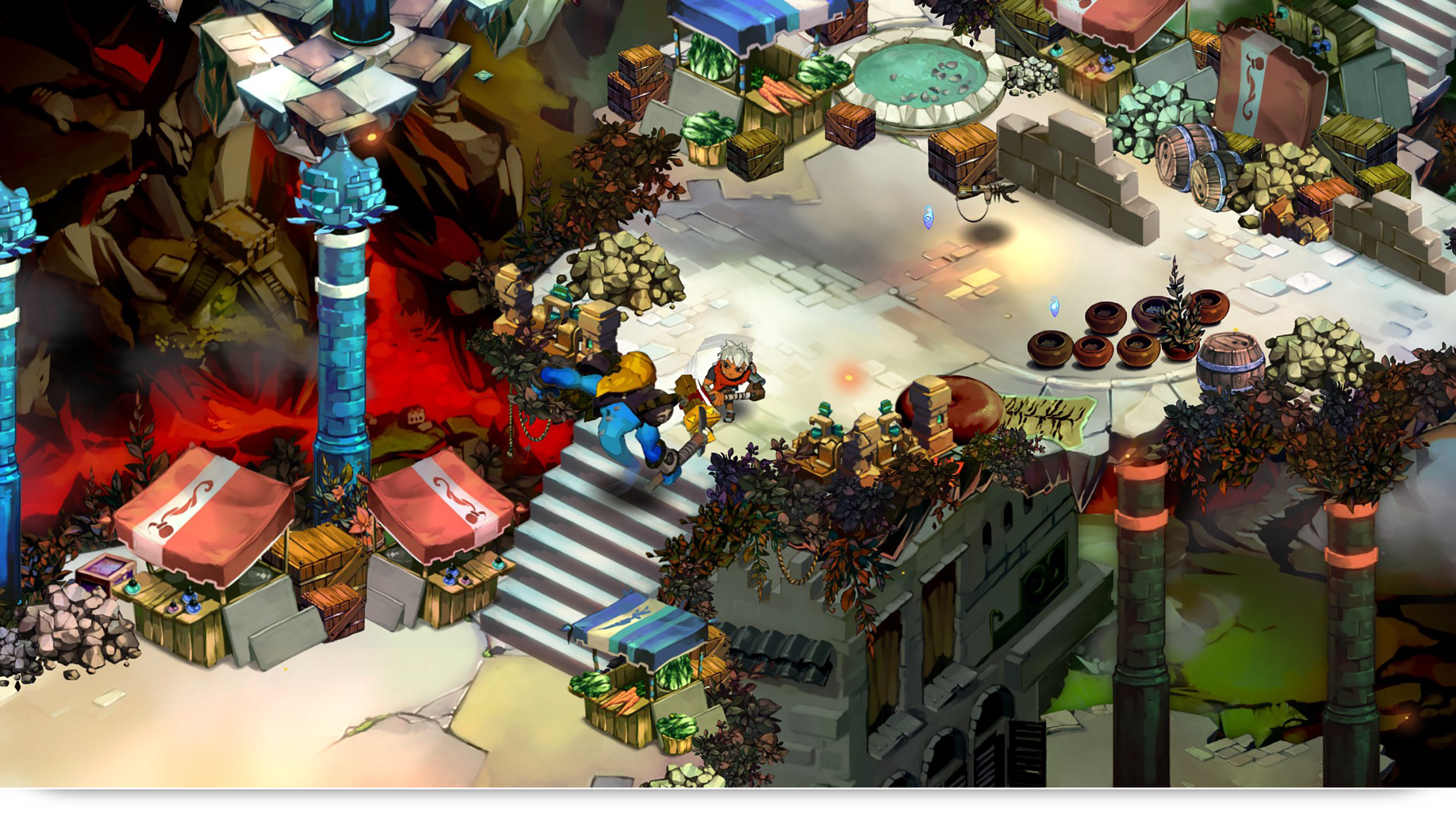
Image result for bastion gameplay
Above is the kid battling a Gasfella.

I’ve played my fair share of indie games throughout my decade of gaming, but it somehow took me until 2019 to finally play what is often considered one of the best titles ever produced by a small team. After finishing Bastion, I can safely say I agree with this sentiment.

The game immediately captivated me without the need for a lengthy cutscene. It begins with a boy rising from his bed atop a floating piece of debris in a void. You gain control of him within seconds, and platforms begin appearing before the boy as you move him forward. The moving soundtrack by Darren Korb starts to kick in alongside gruff narration from Logan Cunningham. Soon enough, the kid, who is never referred to as anything but, meets up with Rucks, the source of the narration and the only character who ever speaks outside of the game's several vocal songs. He explains to the kid that he has arrived at the Bastion, the heart of the city of Caelondia, and that he must retrieve the cores scattered throughout the city in order to undo the effects of the Calamity that broke apart the floating landmasses and turned all but a few survivors to ash. This plot eventually thickens, as survivors of the calamity are introduced and the reasons for why the Calamity occurred are hinted at more and more.

Bastion plays like a linear dungeon crawler, with an isometric viewpoint and pieces of the levels floating into place as you progress and hordes of enemies appearing as unexplored areas are unveiled. The path you travel along is quite constrained, but every so often there are small optional segments that contain extra crystals, the game's currency. Near the end of each level is one of the cores that are needed to reverse the Calamity, and upon returning to the Bastion with a core, a core can be spent to build a new structure that can be accessed between levels. These include the refinery, which can be used to equip an additional stat boosting beverage each time you level up, the forge, which is used to upgrade weapons with crystals and crafting materials, and the shrine, where you can enable idols that increase your experience gain in exchange for raising the game's difficulty in various ways.

This idol system is a fantastic way to allow players to adjust the difficulty of the game as they see fit. For example, if someone was best accustomed to the damage and health levels of enemies on normal difficulty, but wanted a greater challenge without jumping all the way to hard mode, they could enable the idols that increase enemy attack speed and cause enemy corpses to explode. I find this preferable to something like Halo's skull system, as many of those individual modifiers are enough to drastically change the experience.

You’ll be spending the bulk of your time in Bastion battling enemies, and this is where the game  shines. The combat isn't very complicated - you can wield two weapons, unleash a special move by consuming black tonic, heal by using a health tonic, use a shield, and roll to evade attacks. Almost every encounter is well balanced - there are usually many enemies, just enough to make avoiding damage challenging but fair; there are a wide variety of foes with unique attributes and attacks, but unlike many games I've played where this is the case, not one of these enemy types was annoying to fight. The game's various weapons all felt distinct, and finding ideal combinations of weapons, special attacks, and tonics was entertaining. Fights are often fast-paced and fierce as a result of their immaculate design, and combat is rarely boring. The only time that the battles even approached being dull was during the several optional side stories which can be accessed from the Bastion in which you face numerous waves of enemies in the Kid's dreams while the fascinating backstories of each major character are explained. Bastion has all the hallmarks of a great action game, and with a good story to boot.

For being released early in the late-2000s indie surge, Bastion's presentation has aged remarkably well. The environments are hand drawn in remarkable detail, and although the 3D models used for characters initially looked a bit out of place to me, I eventually grew to find them aesthetically pleasing. The aforementioned soundtrack amplified the fantastical atmosphere to great heights during the more peaceful moments of exploration, and increased the intensity of combat. It's difficult to describe what the soundtrack sounds like - the composer describes it as "acoustic frontier trip hop", and I very much enjoyed listening to it. Cunningham's performance as Rucks is perhaps my favorite element of the presentation. Even when delivering exposition, he does so in an encapsulating manner, and the brief comments he makes on certain actions, such as the kid falling off a platform.

There are few qualms that I have with Bastion, but the game isn't perfect. One of my issues is with the game's arsenal. Most of the weapons were great fun to use, but several of them, such as the mortar and the sniper rifle, are overly situational and impractical to use outside of the levels they are introduced in.  This is hardly annoying because you are free to use whatever weapons you choose for the vast majority of the game, but the variety of weapons that are always useful is lower than I would have liked. Additionally, the optional mastery challenges for each weapon often require borderline perfect performance in order to earn the highest rewards that you can receive from them, but this is also is a mere nitpick. Another small complaint is that much as I enjoyed the story, I was disappointed by the lack of characterization that some of the game's few characters received, especially the completely silent Kid. Their backstories were interesting, but they were not.

Bastion is an all around excellent game. From its beautiful visuals to its exciting combat, there are few areas in which it falters. It is easily one of the best indie games I've ever played, and I would strongly recommend it.

Ups
Beautiful visuals
Invigorating soundtrack
Simple but satisfying combat
Intriguing story
Idol system is innovative
Excellent narration

Downs
Several overly situational weapons
Optional challenges drag on too long
Lack of characterization for the kid

Also available on Xbox 360, Xbox One, PlayStation 3, PlayStation Vita, PlayStation 4, and Switch

ESRB: E 10+ Content: Animated Blood, Fantasy Violence, and Use of Alcohol and Tobacco Price: $14.99 (Download)

Monday, April 8, 2019

Hollow Knight Review

Hollow Knight
Publisher: Team Cherry Developer: Team Cherry Platform: Switch Release: 2017 Players: Genre: 2D Platformer / Action Rating: 8.7  \ 10.0: Fantastic

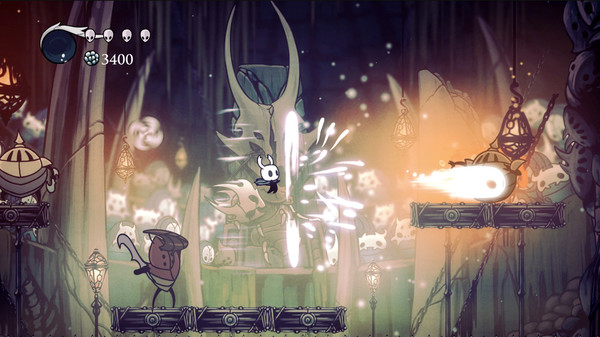
Above is the Knight fighting in the Coliseum of Fools

I admittedly have always had an aversion to games well known for their crushing difficulty. I am, however, drawn to indie platformers with great presentation, and Hollow Knight met both of those prerequisites. Although Hollow Knight is part of  the exploration-driven Metroidvania sub-genre that I'm not well acquainted with, I was still drawn to it from the gameplay I saw, and if I hadn't overcome my skepticism, I would have missed out on an absolutely fantastic experience.

Hollow Knight sparingly reveals any explicit details of its story or lore to the player. All that is immediately clear is that you are exploring a fallen kingdom of insects, and it soon becomes apparent that this downfall was caused by an infection that devastated the population. Partway into the game, you are given one explicit goal: to defeat the three Dreamers that are sealing the entrance to the Black Egg Temple where the vessel of the infection lies. Their locations are marked on your map, but the explicit path to reach one is not clear. This prevented me from ever feeling completely lost or from feeling overwhelmed with things to do as I might in an open world Ubisoft game.

Once you acquire the ability to dash from Greenpath, the second major area, the game truly opens up. Not since playing Breath of the Wild  have I been so engrossed by a game's world. Hollow Knight is absolutely packed with content, and unlike many other massive games I've played, hardly any of the the activities feel pointless, repetitive, or boring. I always had a small goal in mind, and even once I
had seemingly uncovered the entire map, there was more to do and discover. This is helped by simple but satisfying combat and systems that reward exploration. When you begin the game, all you can do is swipe your blade in each direction and heal by consuming a portion of your soul meter, which is refilled by striking enemies. As you uncover more of the map, you will acquire abilities that make new areas accessible and increase your combat prowess in typical Metroidvania fashion, such as a double jump and the ability to slide down and jump off walls. You will also discover spells and charms. There is one spell corresponding to each attack direction, and by using them you will consume part of your soul meter without gaining any back by hitting enemies with them, which forces you to carefully consider whether using spells is worth delaying your next healing opportunity. Charms have a great number of effects ranging from simply boosting the amount of damage your spells do to generating a shield that circles around you or summoning a group of minions that will fly towards enemies and explode. Each charm requires a certain number of notches to use depending on their power, and coming up with ideal charm combinations as I expanded my maximum number of notches was a consistent source of fun during my many hours spent with the game. Should you die, you will awake at the last bench you sat at. These serve as the game's save points, and there are a few dozen scattered across the Hallownest. You will have no money and one third of soul meter will become unusable, which limits your healing and spell usage, until you kill your shade, the ghost that is left behind at the location of your death. Once you slay the shade, your money will be returned and you soul meter will be replenished, but if you perish again before defeating it, all your money that you were carrying will be gone for good. This system created some very tense situations, but due to the great distance between each bench, it often led to me spending multiple minutes backtracking my way to my place of death, which was hardly ever enjoyable.

I previously mentioned that few activities in Hallow Knight felt repetitive, but there are a couple exceptions, and those are uncovering the map and unlocking fast travel points. As you explore new areas, you will come across trails of paper scraps that, when followed, will lead you to a map salesman named Cornifer who is located in every major area. Before finding him, you will be unable to see exactly where you are in each area, and if you come across him without possessing enough money to buy a map, you will have to return to the town of Dirtmouth on the surface of the Hallownest to buy it from his wife's shop. Each area also possesses Stag stations, where you can summon a large bug, the last of his kind, to ferry you from one station to another. The dialogue with these characters was amusing and interesting, but encountering them began to wear off its welcome after I found each of them well over a dozen times.

The bulk of Hollow Knight's challenge comes from its numerous boss battles, and this is what intimidated me the most going in the most. While I died more times than I can count throughout my encounters with the bosses, almost each one was a pleasure to fight. They were entertaining tests of reflexes that rarely felt unfair and were accompanied by fantastic music. Healing requires standing still, a factor that was seemingly insignificant during exploration but resulted in many near-miss moments during boss battles that were downright nerve-wracking. Figuring out which charm combinations was a blast and never felt like tedious trial and error because the fights are often designed in ways that prevent any charm combination from being truly useless. However, the aforementioned backtracking issue affects a great number of boss battles. While there is sometimes a bench placed right next to the arena and the dream battles place you right next to the boss when you fail, many bosses have at upwards of several minutes of backtracking to do between them and the nearest bench. While I did enjoy the fights themselves, having to retread the same steps over and over to finish some of the harder encounters slowly eroded my strength of will by making the prospect of trying again seem like a worse option each time.

Beating the game is as challenging and time consuming as you choose to make it. Large portions of the map can be completely ignored if your sole goal is to enter the Black Egg Temple. Many bosses and abilities can be ignored, but will make your confrontation with the vessel easier. When I arrived at the temple after 30 hours of gameplay, the final battle was disappointingly easy, and it accounted for only one of my many dozens of deaths up to that point. However, there are multiple endings that are reliant on interactions with certain characters and the amount of essence you have, a substance acquired by defeating the spirits of warriors and the extra difficult dream versions of defeated bosses located throughout the map, and one of these endings involves a final battle that is significantly more difficult.

Defeating this boss was one of the most triumphant moments in any game I've played, and I unfortunately may not have experienced it I wasn't in contact with friends who had spent dozens of hours in the game. The path to achieve this true ending is incredibly obscure, and given how many extra hours I put in in order to reach it, I have no idea why. Once the aforementioned essence requirement is met, you must travel to two unspecified spots on the massive map to get two halves of a charm, then access a previously inaccessible area that is opened in another unspecified location, and you must do so while wearing the completed charm. All of these steps are merely hinted at, and while a process such as this would be acceptable for smaller side quests, having a true ending be so hidden is excessive.

When it comes to presentation, Hollow Knight is no doubt one of the most impressive indie games ever released. While I do enjoy the pixel art that's incredibly common among indie platformers, this game's stunning hand-drawn art is refreshing. The graphics and music contribute to a wonderful atmosphere that ranges from peaceful to somber to unsettling during exploration, and increase the intensity of the many boss battles. The game's wonderful audiovisual elements impressed me even more when I discovered that the art was solely worked on by one person, Ari Gibson, and the soundtrack was composed by Christopher Larkin alone.

Hollow Knight is a superb experience almost from start to finish. It manages to look and sound amazing despite being worked on by so few people, it manages to stay consistently engaging despite having a colossal world, and it manages to be very challenging but rarely unfair. I haven't played many Metroidvanias but I can safely assume that it will be one of my favorites for the foreseeable future and I would strongly recommend experiencing it for yourself.

Ups
Stunning art style
Excellent soundtrack
Engrossing atmosphere
Hard but fair boss fights
Charms are fun to mix, match, and use
Numerous secrets to uncover
Highly rewarding exploration
Satisfying combat

Downs
Excessive backtracking
Frequently cryptic optional objections
Several mildly irritating boss battles
Some slightly repetitive tasks

ESRB: E 10+ Content: Fantasy Violence and Mild Blood Price: $14.99 (Digital)

Friday, March 8, 2019

Super Smash Bros Ultimate Review

Super Smash Bros. Ultimate
Publisher: Nintendo Developer: Nintendo Platform: Switch Release: 2018 Players: 1-8 (Smash), 1-4 (Online), 1 (Spirits) Genre: 2D Fighter / 2D Platformer Rating: 9.6 \ 10.0: Masterful
Image result for super smash bros ultimate gameplay
Above are four players fighting on Mooray Tower.

For as long as series has existed, no Nintendo home console has gone without a Super Smash Bros. game, and it is momentous occasion when one is finally added to a console's library. When the announcement for Super Smash Bros. Ultimate finally came, I was more excited than I've been for any other game. My expectations were set so high that they couldn't have possibly been fulfilled, but the final product ended up surprisingly close to my pipe dream.  The prospect of a portable Smash game with easily accessible local multiplayer was already incredible, and Ultimate goes above and beyond to be capable of providing hundreds of hours of fun without getting stale.

The updates made to Smash's mechanics are all positive and help to make it the most competitively viable game in the franchise since MeleeSSB4 had the best over game feel of the series at the time of its release in my eyes,  but Ultimate has made nothing but improvements in this category. The overall speed of gameplay has been considerably increased, directional air dodging has been added, and repeatedly dodging on the ground is now punished, as the amount of time required to dodge again increases with each time it is performed and resets after several seconds of inactivity. General game feel has been further improved thanks to wonderful sound design that make hits greatly satisfying to land, and the visual indicator of a critical hit which is usually accompanied by the camera zooming in (when two players are left in a match) makes victory feel sweeter than it ever has before. These mechanical improvements aren't very noticeable in chaotic matches with three or more players, but one-on-one fights are the best they've ever been. The added speed and intensity makes every battle incredibly thrilling, even when using the bulkiest characters in the roster. Never have I played a multiplayer game that simultaneously excels so greatly on both a casual and competitive level.

Quality of life changes have also been made to greatly increase the ease of setting up play sessions. For the first time in the franchise, you have the ability to save highly customizable rulesets that can be chosen from a list before selecting the stage and characters. Everything from the launch rate to the stages that can be chosen when "Random" is selected can be tweaked. This allowed me to create my own wacky rulsets, such as a battle royale mode, without the hassle of spending a couple minutes browsing menus each time I wanted to use them. Additionally, you can press the B button within a second of selecting a stage to cancel it, which greatly eases the potential annoyance of having to return to the previous screen if you accidentally choose the wrong stage out of the list of over a hundred - almost every single stage from the whole series has returned, and they're all placed on a single grid that's a bit of a visual mess until you realize that all of the stages are organized in order of their introduction to the series. The flat Omega forms of each stage from SSB4 have returned, and new Battlefield forms (which mirror the design of the flat stage with three platforms of the same name) have been added to offer even more options to players seeking to have as fair a fight as possible. For those who wish to test their skills with multiple characters in the same match, a mode called Squad Strike has been added in which each participant can select a group of either three or five characters, choose the order in which they will use them, and fight in a battle in which they have one life per character.

The roster consists of a whopping 70 characters, echo fighters not included. Every single character from past games has returned, along with several newcomers. The Smash bros. series has always served as a celebration of Nintendo, but this game also features eight third-party guests: Sonic, Snake from Metal Gear, Mega Man, Pac-Man, Ryu from Steet Fighter, and Cloud from Final Fantasy VII return from Brawl and Smash 4, and Simon Belmont and his echo Richter from Castlevania, as well as Ryu´s echo, Ken, are new additions. Other newcomers include the Inkling from Splatoon, Chrom from Fire Emblem Awakening, Isabelle from Animal Crossing, Incineroar from Pokemon Sun and Moon and the long requested Donkey Kong Country villain King K. Rool and the recurring boss Ridley from the Metroid series, who has appeared in every previous Smash game to some extent but has never been playable. A roster of this size is bound to have some balance issues, but it is possible to excel with any character, and those who were once considered to be on the verge of overpowered such as Chrom and K. Rool have had some of their strongest abilities weakened since launch. The newly added characters don't have the experimental movesets of Smash 4 newcomers like Duck Hunt Dog and Wii Fit Trainer, but many of these fighters rank among my favorites in the series.

Like SSB4 before it, Ultimate features various online modes. The previous game's For Fun and For Glory matchmaking option have been replaced with Quickplay, in which you can select a set of preferred rules and match only with players with matching preferred rules, or Elite Smash, which has a strictly competitive ruleset and only allows each player to user character that they have achieved a high Global Smash Power with. Although this problem has become less severe since launch, many players have reported being placed in matches that used rules that were vastly different from their preferences. The ability to play with friends in lobbies called Battle Arenas has also returned, although the feature has been both improved and downgraded. It is now possible to host public battle arenas for random players to join, which can be quite helpful when no friends are around to play with locally. However, it is sadly no longer possible for multiple players using one console to join a Battle Arena with open player slots, which is something I often did in the Wii U game.

Perhaps the largest new feature is the Spirits mode. Spirits are the replacement for trophies featured in the previous three games - a massive collection of characters from every series the game represents, both obscure and iconic. There are even Spirits from a few franchises with no playable characters, such as Shantae and Rayman. Unfortunately, these Spirits lack the descriptions featured on every single trophy from the past games, which left me without any clue of who some of the more obscure characters were. Additionally, they are not represented by highly detailed models as trophies were, but instead by official art from the source games, a change I have mixed feelings on. Unlike trophies, however, Spirits can influence gameplay. Each Support Spirit offers a stat boost or special effect such as brief invincibility at the start of a battle, starting the battle with a certain item equipped, or increased special attack power, and these can be combined with Primary Spirits, which sometimes have stat boosts as well, to create loadouts to use against enemies in Spirits mode. These enemies have have stipulations attached to the fight, such as modified gravity, the enemy being giant or metal, a team of weaker enemies being present that essentially make the encounters a successor to the Event mode from the past three Smash games which is no longer present by name. When the enemies in Spirits mode are defeated, their corresponding Spirit is added to your collection. Spirit battles can be completed either through the Spirit Board, a constantly changing selection of battles, or through the adventure mode, World of Light. I adored SSB Brawl's Subspace Emissary and was expecting a follow up to that mode's Kirby-style platforming and wonderfully produced cutscenes when the new adventure mode was first announced, but that is unfortunately not the case.

In World of Light, the world of Smash Bros is threatened by an all-powerful deity named Galeem who uses his powers to possess everyone on the game's roster and create numerous clones of them - all except for Kirby, who manages to escape Galeem's initial attack. Now Kirby must defeat Galeem and free his fellow fighters from possession. The gameplay revolves around travelling a massive map, engaging in hundreds of Spirit battles to clear the path to Galeem. Many of these fights are optional, and if one wishes to finish all of them, it can take upwards of 25 hours. This quest was not a bad one overall, but the constant Spirit battles began to overstay their welcome after several hours. The main saving grace of this nonstop string of fights is that many of them contain clever and amusing references to the Spirits' source material. For example, the Guts Man Spirit battle has a possessed Mega Man constantly using grabs and throws while using the alternate costume which corresponds to the Super Arm weapon from the first Mega Man game, which belongs to Guts Man and is used to lift and throw large rocks. My favorite instance of this was the dedicated Street Fighter area of the World of Light map, a series of fights with increased gravity and limited health of exclusively flat stages which are mean to replicate the gameplay of that series.

Although it took a few months after launch to be added, the Stage Builder has returned, and it's better than it's ever been before. The variety of materials you can use to sculpt stage geometry has been greatly expanded since the last game, which has allowed creative builders to make plenty of crude yet charming art using this mode. You can also now change the properties of objects in far more ways, such as modifying the speed of wind currents and causing platforms to rotate. ditionally, for the first time in the series, your creations can be easily shared online. Custom stages, Mii Fighters, and replays (which can now be edited) can all be shared online for anyone to download, which eliminates the need to assemble your own versions of stages that are used for popular user-created modes. Creating absurd stages to mess around on was one of my favorite parts of the last two Smash titles, and Ultimate's iteration of this mode does not disappoint.

Despite being a predominantly multiplayer series, the past few Smash games have had a wealth of single-player content, and it doesn't stop at Spirits mode. The Classic mode, in which you play through a series of fights with special conditions in a similar vein to Spirit battles which concludes with a bonus stage and boss fight, has been revamped in a way I greatly enjoyed. This time around, every single character has a personalized Classic mode. The fights are all tailored around their series and personality traits, which often resulted in clever references like those that many of the Spirit battles contain. In the past, every Classic mode run ended with a fight with either Master Hand, Crazy Hand, or both at once. This time around, many of the Classic modes end with new boss battles which will pleasantly surprise fans of certain franchises. While there are still quite a few Master Hand fights in the roster, this is definitely my favorite variation of Classic mode in the series so far.

Other options include the Training mode, which remains a helpful tool for serious players who want to carefully study the impact of certain moves and items, and the Multi-Man Smash mode from previous games in which you face a horde of weak fighters. However, some modes that were present in Ultimate's predecessors have been unfortunately excluded. These include the Home Run Derby and Target Practice modes which I admittedly hardly played, and All Star mode, which has been replaced by a variation of Multi-man Smash which replaces Mii fighters with the entire roster.

Super Smash Bros. Ultimate may not be the definitive Smash experience in every way, but it is an excellent game regardless. Its numerous improvements to the franchise more than make up for its omissions, and it will not doubt be one of my go-to multiplayer games for many years to come. It is unlikely that a better local multiplayer experience will ever be available on the Switch.

Ups
Expansive yet balanced roster
Newcomers are very fun to play
Large amount of single player content
Countless clever references
Multitude of quality of life changes
News mechanics to make game competitive
Nearly every stage has returned from past games
Celebrates the history of many third-party franchises
Fleshed out and highly versatile stage builder

Downs
Lack of stage builder
Frustrating lobby system
World of Light can become tedious
Spirits lack the charm of trophies

ESRB: E 10+ Content: Cartoon Violence, Comic Mischief, and Suggestive Themes Price: $59.99 (Retail / Download)

Thursday, January 10, 2019

Deltarune: Chapter 1 Review

Deltarune: Chapter 1
Publisher: Toby Fox Developer: Toby Fox Platform: PC Release: 2018 Players: Genre: RPG Rating: 9.5 \ 10.0: Masterful
Image result for deltarune
Above are Kris, Ralsei and Susie engaged in a battle.

WARNING: This review will feature minor story spoilers for Deltarune and Undertale. Readers are advised to have previously played Undertale.

In 2015, Toby Fox's Undertale was released, and it quickly became one of the most acclaimed indie games ever released thanks to its clever meta-narrative, memorable characters, fantastic soundtrack and its unique combat system that combined traditional turn-based systems with bullet hell. It's one of my favorite games of all time, and I never expected it to receive a follow-up. When Toby Fox announced out the blue that there would be surprise awaiting his fans on October 31, I was beyond excited, and I immediately downloaded Deltarune knowing nothing about it other than it was somehow related to UndertaleDeltarune is not a full game - it's a two to three hour-long demo, and  Fox later revealed in an FAQ that the full game may never come out, but that he will attempt to assemble a team to complete it. If the final game manages to maintain the level of quality of this introductory chapter, it is bound to be one of the best games I've ever played.

The game begins with you creating a character, with each cosmetic choice being accompanied by an ominous question. Once this process if complete, your character is discarded because "in this world you don't get to choose who you are". You then wake up as a character who bears a striking resemblance to the previous game's protagonist Frisk in the familiar setting of Toriel's house. Things don't remain familiar for long as you are driven to school, as it becomes apparent that this game is not set before or after the events of Undertale. many familiar faces are present, but the cast from Undertale is now living peacefully above ground, and details such as Asriel being away at college don't line up with the events of the previous game's plot.

After being tasked by their teacher to retrieve chalk with their menacing classmate Susie, Kris (the name your character is identified as at this point), they fall into a hole and awake in a mysterious underground area. They soon enter an empty village and encounter a hooded figure claiming to be the prince of this kingdom of darkness and explains to them a prophecy foretelling that the three of them are destined to stop an incoming cataclysm resulting from an imbalance of light and dark in the world. A mischievous skeleton named Lancer appears and initiates a battle once the tale is finished. Once the battle is over, the prince removes his hood and reveals himself to be goat named Ralsie. Now the trio begins their quest to find the fountain of darkness at the center of the kingdom which threatens the aforementioned balance.

Throughout the brief adventure, Ralsei, Susie, and Lancer all become endearing characters. Kris is as silent as a protagonist gets, Ralsei is a typical shy nerd, Susie is a typical bully who thinks everything is lame, and Lancer is basically a combination of the personalities of Sans and Papyrus from Undertale, but solid writing elevates everyone (with the exception) to a higher standard than mere archetypes. although their development feels slightly rushed due to the demo’s length, I was pleasantly surprised by several surprisingly poignant moments that I would have expected to occur later in the plot.One of my main sources of excitement for the final product stems from my desire to see these characters interact with each other again.

When the the game's first battle began, I was taken off guard by the smooth transition into the new battle UI combined with the opening notes of the wonderful battle theme "Rude Buster". During combat, the game now has the same perspective as typical typical turn-based JRPGs. That is in order to account for the newly introduced party system, a change I was not expecting but quickly became a fan of. As would be expected of a party system, Kris, Ralsei, and Susie all have special traits. Kris can perform special actions on enemies and spare them like in Undertale as well as boost the party’s stats, Ralsei can cast healing spells, and Susie can use offensive. Everyone has the ability to attack normally as well as to defend. Defending reduces damage taken as you would expect, and it also fills a portion of the team’s TP meter, which is consumed when using the aforementioned special abilities and spells. The meter is also refilled a small amount if you narrowly dodge an enemy attack, which is one again performed by navigating a soul around a box in bullet hell style. These additions may be quite common in the RPG genre, but they help greatly to ease the repetition of combat. An aspect of this game that is unique is Susie - she attacks on her own whether you want her to or not, and sparing every enemy without allowing her to harm them poses an interesting challenge that I wouldn’t have expected to be imposed on me by a party member. Another fantastic change that I did not expect but was overjoyed by is the removal of random encounters. These were not highly obnoxious in Undertale, but I have never played a game that I enjoyed because of random battles rather than in spite of them. Enemies do respawn upon revisiting a room, but being able to see and avoid them in the overworld is an excellent change. However, the combat can become tedious after awhile. Like with Undertale, sparing an enemy requires performing a series of actions on the act menu, and although the conditions to make an enemy willing to surrender are unique for each one, they are the exact same for each of a type enemy. Because of this, I often became slightly bored after battling the same enemy ten or so times, as discovering the path to victory was only ever a puzzle the first time I encountered them, and their attacks had become predictable. However, the first few battles with each enemy type were always incredibly entertaining, and much of the dialogue resulting from using an action on an enemy was very amusing. The magic of the combat in this game and it’s predcessor comes from discovering the peaceful path to victory and learning how to dodge previously unseen attacks, but this system could have immensity benefitted from a greater number of unique foes.

If you choose to explore and interact with every object an area, it soon becomes apparent that Toby's sense of humor is as strong as ever. The game consistently had me laughing, and jokes were spaced just far enough apart that I was never worn out by them. Additionally, like its predecessor, having curiosity and persistence when interacting with Deltarune's environment is often rewarded with dialogue so amusing that it's a shame many players may never come across it. Exploring the environments is made enjoyable not only by humor, but by a series of simple puzzles and an hidden quest that is well worth seeking out for players who find the game’s combat to be too easy.

Many people criticized Undertale for its simplistic art style that caused some areas of the game to look bland, and this issue has been fully addressed. The level of detail has been notably increased, especially in regards to animation. I especially loved the moves performed by each character at the beginning and end of each battle. Each area you visit has a unique aesthetic, and all of the character designs are as charmingly bizarre as in the game's predecessor. The soundtrack is unsurprisingly phenomenal. Like Undertale before it, the music uses a combination of synthetic instruments, chiptunes, and several prominent leitmotifs are present.

One of Undertale’s claims to faim was its inclusion of numerous endings that were influenced by which characters the player chose to kill or spare. Interestingly, there is no longer a pacifist or genocide route, let alone any changes that result from killing or sparing monsters. This doesn’t seem to have anything to do with Deltarune being a demo - from the very beginning, the game reinforces the idea that your choices are irrelevant. This is done in a variety of subtle ways, from the game offering you dialogue choices only to cut you off to monsters  running away from battle when their health bars are depleted rather than dying outright (“killing” them does not reward XP, either). This leads to a surprising predetermined ending that left me desperately wanting to know how the story continues.

If this first chapter is any indication, Deltarune could end up being a masterpiece. It has addressed almost every criticism that I had of Undertale, and has even improved upon many of the gameplay aspects that I found to be satisfactory in that game. There isn’t a single area in which this game more than slightly falters, whether it’s the music, visuals, combat, humor, or what part of the story is present. Given that this demo costs nothing and can easily be beaten in one sitting, I could not recommend it enough to anyone seeking an enjoyable RPG experience. I have no idea when or even if the full game will release, but I am more excited for it than I have ever been for another game in the genre.

Ups
Combat that greatly improves upon its predecessor
Charming animations and pleasant environments
Wonderful soundtrack
Fantastic writing
Many amusing details and hidden dialogue pieces
Surprising and intriguing ending.

Downs
Combat still can become tedious after repeat encounters

ESRB: NA Content: NA Price: $0.00 (Download)

Tuesday, October 30, 2018

Metal Slug 3 Review

Metal Slug 3
Publisher: SNK Playmore Developer: SNK Playmore / Hamster (Switch) Platform: Switch Release: 2000 Genre: 2D Shooter / 2D Platformer Rating: 9.1 \ 10.0: Outstanding
Image result for metal slug 3
Above are two players fighting mutant crabs.

I adore every mainline game in the Metal Slug series, and ever since I first played it, I have regarded Metal Slug 3 as not only franchise's best entry but as the best arcade game I have ever played. When I noticed that only the first three Metal Slug titles had been ported to Switch rather then the Metal Slug Anthology compilation which had been ported to the PS4 only month's before the Switch's release, I was disappointed, but still excited to play them on the go.

For those unaware, Metal Slug is a series of run-and-gun arcade platformers best known for its punishing difficulty and its top notch spritework. Most of the games are aggressively linear, which detracts from their replay value, but Metal Slug 3 has numerous hidden shortcuts and alternative routes - so many, in fact, that I have played through this game at least ten times and am fairly sure I haven't discovered all of them. Each entry features numerous vehicles and weapons, and a mix of soldiers and supernatural creatures to fight. With few exceptions, attacks will kill you instantly and you therefore must be wary of gunfire.  but the game will often place powerful weapons and vehicles in locations that allow you to go on a temporary power trip in which you can cause significant environment destruction while mowing down dozens of enemies. The game is consistently fun, but moments such as these were especially exhilarating. MS3 leans more heavily on the aforementioned supernatural aspect which, in conjunction with the branching pathways and over-the-top scenarios ensure that it never gets stale. Throughout the adventure you'll battle massive mutant crabs, zombies, Martians, and, depending on what paths you choose, yetis, flesh-eating slugs, mummies, and anthropomorphic Venus flytraps. The zombies are especially noteworthy, as they can infect you and greatly modify the gameplay. As a zombie, you move slowly, jump slowly, and cannot use special weapons, but there are two major advantages: You are invulnerable to attacks from all non-zombies and your grenades are replaced with streams of blood vomit that can nearly clear the entire screen. This is a massive step up from other transformations in the series such as mummification, which is an objective downgrade from human form. The fifth and final mission features some phenomenal setpieces, including a jetpack-based pursuit of a military convoy and a vertically-scrolling shootout with in space with UFOs, and it's easily the pinnacle of the series.

The presentation of each Metal Slug game is top notch, and is certainly no exception. Every sprite and animation was crafted with incredible detail, and small visual touches such as soldiers jumping in the air with shocked expressions when they first notice you and sticking white surrender flags out of the hatches of their tanks when you destroy them add immensely to the game's charm. Anyone will tell you these games look fantastic, but their music is unfortunately far less frequently discussed. The instruments may be synthetic, but they still sound great; the electric guitar pieces that play during the zombie, underwater, and outer-space missions and the brass-heavy pieces from the jungle mission, final boss, and credits are particularly memorable. My one gripe with the presentation is one that's the fault not of the game, but the port: Slowdown. I experienced semi-regular performance drops that caused the game to slow down, and while they never rendered the game unplayable, they were quite annoying at times. Metal Slug 3 is a strictly sprite-based arcade game from 2000 that runs without a hitch on far weaker consoles (even handhelds), and although this is not a deal breaking issue, it's certainly worth noting and quite puzzling given that the Switch is the most powerful handheld console ever released.

The performance issues are disappointing, but this port also has some handy features, including the ability to create and load a single save state, add credits, adjust the time limit (which has never had any impact in the gameplay throughout all of my experience with Metal Slug), customize controls, and adjust the width of the screen if for some reason you're bothered enough by the 4:3 aspect ratio enough to ruin the visual fidelity by stretching it to 16:9. Even without these additions, the Metal Slug games are incredibly well-suited for the Switch. They can all be beaten in under 90 minutes which allowed me to easily play through them in one sitting when on the go, and this pairs excellently with the possibility for a second player to drop in or out at any time. I had played through this game many times before buying it on my Switch, and in the several months since then I've played through it nearly ten times. each time with a different friend when away from my home and I never got tired of it. Unfortunately, this version does not have online co-op, but this a nitpick, as I would not have used this feature frequently.

Despite this port’s flaws, it is still well worth buying. Most people probably won’t be able to get as much value out of it as I have which can make the $8 price tag seem a bit steep, but if you expect to play through it more than once, then I’d say that the price is more than fair. Few other games are as much of a joy for me to play than this one, and I’d highly recommend it to any one seeking a short but sweet experience that can be enjoyed even more with a friend.

Originally on the SNK Neo-Geo
Also available on PlayStation 2, PlayStation Portable (via Metal Slug Anthology), PlayStation 3, PlayStation Vita, PlayStation 4, Xbox, Xbox 360, Xbox One, Wii, and PC

Ups
Branching paths add replay value
Amazing pixel art
Great soundtrack
Fantastic variety and final mission
Portability allows for easy co-op
More variety than the rest of the franchise
New options added to Switch port

Downs
Very short
Frequent slowdown
Lack 360  and Steam's online co-op

The System Difference: Most console ports of Metal Slug 3 and the other games in the series also allow for unlimited continues, but lack most of the other options that the Arcade Archives version has. However, unlike in this release of the game, I have never encountered any framerate drops or slowdown when playing Metal Slug Anthology on the Wii. Additionally, this Switch port lacks the online co-op that was added to the version of the game available on all non-Nintendo seventh and eighth-generation consoles and PC, and the port to the original Xbox features two additional modes that are mysteriously not present in any of the numerous releases of the game from the past 15 years.

ESRB: T Content: Blood and Violence Price: $7.99 (Digital)

Tuesday, October 2, 2018

Halo: The Master Chief Collection Review

Halo: The Master Chief Collection
Publisher: Microsoft Developer: 343 Industries Platform: Xbox One Release: 2014 Players: 1-4 (Campaign), 2-16 (Multiplayer)*  Genre: First-Person Shooter Rating: 9.3 \ 10.0: Outstanding
*Player counts vary by each campaign and each multiplayer mode
Image result for halo 2 anniversary
A scene from the remastered version of the Halo 2 mission Regret.

IMPORTANT NOTE: The aspects of individual games in this compilation will not be thoroughly discussed in this review. Reviews of each game can be found here.

The Halo series has seen a dip in quality ever since 343 Industries became the developer responsible for it. Their original Halo content may not be at the same level of quality as Bungie's work on the franchise, but 343 has done a fantastic job at celebrating the series's history with Halo: The Master Chief Collection.

This compilation includes includes almost all of the content from Halo: Combat Evolved Anniversary, Halo 2 (which has been remastered), Halo 3, and Halo 4. Halo 3: ODST's campaign is available a piece of $5 DLC, meaning that Halo: Reach is unfortunately the only Halo FPS released as of 2014 not to receive representation in the collection. Each game now runs at 1080p 60 FPS, a framerate and resolution that none of the games had achieved on their original platforms. I have played MCC exclusively on the original model Xbox One, and the framerate remained mostly stable, but I did experience somewhat frequent drops to about 30 FPS when playing split screen or online. This instability never made the game unplayable, but I was noticeable. This issue is most likely not as prominent on the Xbox One S and X models.

The star of the show is Halo 2. This anthology was released on the game's tenth anniversary, and it received remastered graphics and music, CGI cutscenes done by Blur Studios, and new terminals. The upgraded visuals are absolutely stunning. Halo 2: Anniversary is one of the best-looking games I have ever played and undoubtedly the best-looking on the Xbox One. The incredibly well-detailed textures are an important factor in this, but the beautiful lighting and shading, and the vibrant color palette are what truly sell the look. The new cutscenes look so good that they verge on photorealism,. The human characters did have a slight uncanny valley effect, but to deny the fidelity of the cinematics would be unfair. Halo 2's score is a wonderful mix of epic orchestra and intense rock, and it is easily one of my favorite soundtracks to any piece of media. The remastered tracks are slight improvements in most cases, but choir is used to such an extent in several tracks that it sometimes detracts from the overall quality of the music. The new terminals did provide interesting additional context to the events of the game, but I was unable to view some of them because I would receive errors from the Halo Channel app which opens on your Xbox when you interact with them.

As I mentioned earlier, you can download the campaign of Halo 3: ODST for a mere $4.99. While it is quite short compared to the other Halo titles, but it is easily one of my favorites in the franchise and is well worth purchasing. It's a shame that the Firefight mode from ODST was is not available to purchase, as it is one of my favorite horde modes in any shooter and not seeing it represented in what is supposed to be the ultimate Halo experience feels wrong given the mode's popularity.

Several changes have been made which apply to all of the campaigns, but they do not modify gameplay; any mission can be played at any time regardless of whether you have completed the others, and any skulls can be activated even if you have not collected them in each game. As someone who had completed every Halo game prior to purchasing The Master Chief  Collection, I appreciated these features, as I was able to experience my favorite moments from the franchise without having to replay each game (which, being a huge Halo fan, I eventually did anyways). In fact, no changes whatsoever have been made to the actual gameplay, and I wish that they had been. The Flood missions in the first three games are infamous low points in the series, and shinier graphics don't make them any less tedious. It would have also been appreciated if tweaks had been made to Halo 2's brutal Legendary difficult which is well known for being outright unfair due to the high number of Jackal snipers who can instantly kill the player. All of the games are still incredibly fun without these changes, and these are simply nitpicks.

For those seeking an experience designed strictly for co-op, all 50 chapters of Halo 4's Spartan Ops mode can be played in any order you wish. This mode is worth experiencing, but its repetition of environments, unnecessarily lengthy chapters and sometimes absurd number of enemies make it weak compared to the collection's other PvE offerings. You can create loadouts that can be used both in this mode and Halo 4's PvP multiplayer, and every perk and weapon is available from the start. Given that some of the most powerful items were unlocked far too early in the progression cycle of the original version of Halo 4, it hardly makes a difference that nothing has to be unlocked here. The large number of armor sets from Halo 3 and are also all immediately wearable, but you are unfortunately unable to swap out individual pieces (if, for example, you want to wear the Hayabusa armor in Halo 3, you must wear every single piece of it, you couldn't also have ODST shoulder pads or the MJOLNIR Mk VI chestplate).

When it comes to offline multiplayer, The Master Chief Collection has enough content to stay enjoyable for years. Every single map from the four games, including DLC, is playable (except for several maps exclusive to Gearbox Software's PC port of Combat Evolved which were ripped from the campaign and were mediocre as result). Additionally, the Forge modes for both Halo 3 and 4 are playable, and a new one has been added for Halo 2 Anniversary. Because of the incredible number of options that are available for creating custom maps and gamemodes, I wish that there was a file browser, something that was present in both Halo 3 and Reach, but the only way to share content is to upload it to your profile where friends can then download it.

When this game first launched, its matchmaking was near-unplayable due to terrible servers. This issue has since been resolved, and new playlists have been added. There are playlists for each of the staple gamemodes such as Slayer and Capture the Flag, and each game has its own ranked and unranked playlist with a variety of gamemodes. The game used to allow a vote between potential maps and modes before the match began, but this has strangely been removed and you are now instantly placed in a match without any choices which slightly disappointed me.

Whether you are a Halo veteran or newcomer, The Master Chief Collection is well worth owning and is easily the definitive way to experience each game it includes. The convenience of having a set of some of the greatest shooter campaigns, multiplayer maps, and content creation tools of all time in one package is well worth the price, and the enhanced visuals are the icing on the cake. Several aspects of the original games have been slightly downgraded, but almost all of my issues with this title are nitpicks that can easily be overlooked.

Ups
Phenomenal replay value
All games looks amazing and mostly run at 60 FPS
Halo 2's remastered soundtrack is mostly improved
All missions, skulls, and armor can be accessed from the start
Controls can be changed for each game
New Forge mode added for Halo 2

Downs
No content from Halo: Reach is included
Occasional framerate drops
Halo Channel app rarely works
Gameplay issues left unchanged
Veto system removed from multiplayer
No file browser for Forge creations

ESRB: M Content: Blood & Gore, Language, and Violence Price: $29.99 (Retail / Digital)