Welcome!

Are you a gamer? Want semi-expert opinions on new and old games both popular and overlooked? Then this site is right for you!

Tuesday, June 19, 2018

Splatoon 2: Octo Expansion DLC Review

Splatoon 2: Octo Expansion
Publisher: Nintendo Developer: Nintendo Platform: Switch Release: 2018 Genre: Third-Person Shooter / 3D Platformer Rating: 9.2 \ 10.0: Excellent
Related image
Above is one of the standard "Get to the goal" challenges

While many people that purchased Splatoon 2 did so primarily to play its multiplayer, I was excited to play its Octo Canyon campaign as well, and while it was great, the mode's short length left me wanting more. The Octo Expansion DLC delivers exactly that and manages to surpass the base game's single player in nearly every way. 

You assume the role of an Octoling, the octopus counterpart to the Inklings who, unlike the other Octarian enemies you face, are humanoid. This anonymous Octoling is found in an abandoned subway by Captain Cuttlefish from the original Splatoon, who gives them the code-name Agent 8. The Octoling lost their memory after encountering the first game's protagonist Agent 3 and now has no desire to fight the Inklings. The Captain and Agent 8 are told by a malfunctioning AI in the form of a phone that if they wish to reach the promised land and escape the subway, they must take acquire four "thangs" and assemble an object that will lead them to this paradise. In order to find these thangs, Cuttlefish and Agent 8 must board a train conducted by the mysterious C.Q. Cumber and complete various missions as you travel throughout the subway. 

Unlike Octo Canyon in which the objective of nearly every level was to get from point A to point B , the levels in this expansion tend to be shorter and while there are some levels in which you simply get to the goal, there are others in which you break targets while timed, guide an 8 ball to a goal, survive an onslaught of enemies, carve a pile of crates to match the appearance of a statue, and more. Additionally, you receive guidance from Pearl and Marina of Off the Hook rather than Marie from the Squid Sisters. There are 80 of these missions in total, but not all of them need to be completed in order to acquire the four thangs. Each stage requires a payment of CQ Credits, which are earned by completing levels, to play. If you lose all your lives while playing a stage, you will have to pay the admission fee again to restart from the last checkpoint. Many of the levels will give you a choice between multiple weapons before you begin, and they each reward you with a different number of credits for finishing the challenge while using them in accordance with how difficult they are to use in that situation. Some of these stages are disappointingly short, mildly frustrating or lack creativity (specifically the handful of levels that place you in an unmodified multiplayer map and have you complete a Ranked mode objective while fighting Octolings), the vast majority are incredibly fun. Octo Valley's levels were already creative, but this expansion easily surpasses them by placing you in situations in which you must use weapons and special abilities in unexpected ways that left me genuinely surprised. They are also far more challenging, but rarely frustrating.

Upon completion of a level, you will receive a mem cake, an tiny figure of a character or object from the Splatoon universe containing a small poem which representing Agent 8's memory of the person or thing. Collecting all of the an entire set of related mem cakes (of which there are 10 sets) will grant you a new clothing item upon speaking to the humorously named and sharply dressed Iso Padre. For every handful of levels you beat, you will also gain access to a chat session between Pearl, Marina, and Captain Cuttlefish. On top of being incredibly humorous, these provide interesting backstory for Pearl and Marina and provide context for some of the lore seen in Octo Valley's hidden Sunken Scrolls.

Octo Valley's presentation was one of its strongest aspects, and Octo Expansion meets that high bar of quality. The new music tracks, especially those by Off the Hook, are fantastic and as catchy as ever, with the music from the DLC's final level being especially outstanding. The visuals are also fantastic and varied. The subway and the various bizarre creatures that inhabit it create a delightfully shady and mysterious atmospheres and the levels contain wonderfully detailed skyboxes with odd details such as massive Nintendo consoles and household items floating throughout them.

The high point of Octo Expansion is its final level, which remains entertaining throughout the entirety of its significant length and is sure to greatly please people who have been fans of the series since its beginning. I was enjoying my time with the DLC greatly up to this point, and the finale is easily my favorite piece of single player content in the entire series.

My only gripe with the Octo Expansion other than its handful of less-than-stellar levels is that only the final level's tracks have challenges to complete in the Squid Beatz rythm minigame. It is a shining example of DLC done well, and it is an absolute must-have for anyone that enjoy's Splatoon's single-player content.

Ups
Numerous levels
Great variety in objectives
Fantastic new music and great visuals
An excellent finale
Humorous dialogue with interesting lore explanations

Downs
Several merely average levels
Only some of the new music is playable in Squid Beatz 

ESRB: E10+ Content: Cartoon Violence Price: $19.99 (Download)

Thursday, May 10, 2018

Splatoon 2 Review

Splatoon 2
Publisher: Nintendo Developer: Nintendo Platform: Switch Release: 2017 Players: 1 (Campaign), 4 (Salmon Run), 8 (Turf War, Ranked) Genre: Third-Person Shooter Rating: 8.7 \ 10.0: Fantastic
Image result for splatoon 2 gameplay
Above is a player claiming the tower in the Tower Control mode

Back in 2015, the original Splatoon became one of the few successes on the poor-selling Wii U. It was a wonderfully original game -- a family friendly third-person shooter in which players controlled kids that could transform into squids that could swim through ink fired by their weapons. However, it lacked content at launch, but become a better and better game over the next year. When it was first released, Splatoon 2 was in a better state than its predecessor, but played very similarly and suffered from many of the same issues. While this is still mostly true, I feel that Splatoon 2  has become a worthy sequel thanks to its content updates.

The game's story mode, Octo Canyon, picks up two years after the previous game. The Great Zapfish which provides power to Inkopolis has vanished once again, seemingly due to the Octarians. Marie, one of the Squid Sisters from the previous game, recruits your custom Inkling to help retrieve the Zapfish and track down Callie, the other squid sister, who has also gone missing.

Octo Canyon's gameplay has remained basically unchanged from its Wii U counterpart-- you traverse oddly constructed platforming gauntlets and fighting Octarians along the way in order to reach the mini Zapfish trapped at the end of the level, and you may encounter a hidden scroll or silver sardine. The scrolls contain beautiful artwork accompanied by a piece of the game's bizarre lore and the sardines can be used to upgrade your primary weapons, purchase new sub-weapons, and increase your ink tank's capacity. The primary change made between games is that you now are able to choose what weapon to use before entering a stage. The majority of the stages require you to use a certain weapon on the first playthrough and let you equip whatever you'd like on subsequent runs. Despite the fact that many levels are best designed to accommodate the use of certain weapons, most of them are fun to play regardless of what you choose to use, a select few (especially the boss of the fourth area) are absurdly frustrating to replay with equipment you were not forced to use the first time. This wouldn't be an issue for me, but as a pseudo-completionist, I made it my goal to complete every level in the game using the Splat Dualies in order to acquire the golden version of them to use in multiplayer.

One area in which this game is especially strong is its aesthetic. The bizarre but pleasant character designs and colorful environments are accompanied by what has become one my favorite video game soundtracks. Octo Canyon features music with a bizarre but catchy mix of various instruments and distorted vocal samples, while the multiplayer mode features tracks from various fictional bands including the electronic group the Chirpy Chips, the Celtic rock band Bottom Feeders, the rock group Wet Floor, the jazz band Ink Theory, and the pop idol duo Off the Hook which consists of the game's news anchors Pearl and Marina. All of the multiplayer songs (with the exception of those by Ink Theory) contain lyrics in the fictional Inkling language, but they all sound great despite not being comprehensible.

Splatoon 2's multiplayer gameplay hasn't changed much from the first game either. Like before, you can choose to either play Turf War or Ranked. In Turf War, matches last three minutes and the objective is to have covered the more ground with your team's color of ink than the enemies when time expires. In Ranked, there are four modes that can be played: Splat Zones, in which your team must capture and hold a single point (sometimes two) for a total of 100 seconds by covering it in their team's ink, but a time penalty will be given if the zone is reclaimed by the opposition; Tower Control, in which there is a tower that members of a team must stand on in order to move it towards the goal at the enemy spawn point; Rainmaker, in which the teams fight over the incredibly powerful weapon upon which the mode is named and have a minute to deliver it to the enemy spawn point (if this time expires, the player holding it will automatically be "splatted"); and the new Clam Blitz, in which a player must collect ten clams to acquire a projectile that, when thrown at the enemy team's goal, lowers their defenses and allows their allies to temporarily score points by tossing clams at the goal.

The largest addition to the Splatoon series' multiplayer suite is the new Salmon Run mode. In this take on the coop horde mode, a team of four inklings are sent to various locations that are being attacked by anthropomorphic salmon known as Salmonids. You must survive three waves that each last 100 seconds, but must also gather and deposit enough golden eggs into a capsule to fulfill a quota you are given at the start of each round. Three of these eggs are dropped when you defeat a boss Salmonid, and the number of eggs you must gather raises after each round. Each player can only carry one egg at a time, and Salmonids will snatch up unclaimed eggs and escape.This encourages you to communicate with your team using messages that can be sent using the D-pad in order to grab the eggs before they can be taken by the enemies.

I find all of these multiplayer modes to be enjoyable, but how they are accessed is the source of most of my gripes with this game. Unlike most multiplayer games which allow you to select any game mode at any time and be placed in any of the maps that are compatible with that mode, Splatoon 2's 
maps and modes are scheduled. Every two hours, one ranked game mode will be available, there will be two maps available for that game mode, and two maps for Turf War. Salmon Run will be available for six to twelve hours at a time, and you read that right-- Salmon Run is occasionally unavailable for up to half a day! There have been several times when I've logged on hoping to play Salmon Run only for it to not be playable for several more hours. I could have avoided this by checking the Splatoon 2 calendar on the Switch mobile app but no video game should require me to pay attention to its own schedule when mine is already busy. This incentivized me to grind in order to acquire Salmon Run rewards or to increase my rank in a specific mode (each ranked mode now has an individual rank instead of one rank being shared between each mode like in this game's predecessor). This isn't a fatal flaw, but it can be very annoying to players with limited time to play the game.

Another good but flawed aspect is the customization. There are numerous weapons to use of which two types are new. These are Splat Brellas, which function as a shotgun when the trigger is tapped and deploy a umbrella which functions as a shield when the trigger is held, and Splat Dualies (which are absurdly fun to use, dual-wielded full auto weapons that allow you to dodge roll by pressing B while moving and shooting, then fire a more concentrated stream of ink while standing still after a roll. There are also countless clothing items to collect. They offer various perks such as increased enemy ink resistance, faster ink refill speed, and faster respawn time. When a clothing item is first purchased, you can view its primary perk and how many extra perk slots it has. You unlock extra perk slots by using the piece of gear during battle, and once the slots are unlocked, you are given a random extra perk. By using Super Sea Snails which can be acquired by participating in the monthly Splatfest events, you can increase the number of perk slots a piece of gear has up to four, re-randomize the perks of a fully upgraded piece of gear, or select specific perks. However, picking exactly which perk you want requires Ability Chunk corresponding to that perk. These Chunks are given to you when you re-randomize the perks on a piece of gear, and you receive one Chunk for each perk that was erased from the gear. Most of the perk selections require ten Ability Chunks, but the more powerful perks require 20. Because of this, it can take an absurdly long time that create a full outfit with exactly what perks you want -- I've played the game's multiplayer for several dozen hours and haven't been able to accomplish this myself.

Splatoon 2 is a fantastic game and a must-have for Switch owners who desire a solid multiplayer experience. Although its schedule can be obnoxious and creating your ideal loadout takes far too long, it is well worth playing for both its single- and multiplayer content.

Ups
Fantastic and highly replayable campaign
Great graphics and music
Wide variety of multiplayer modes
Addictive Squid Beatz mode
Decent customization

Downs
Some levels are not optimal to replay with certain weapons
In-game schedule sometimes prevents access to Salmon Run
Game prevents you from properly leaving matches, but sometimes disconnects
Choosing gear upgrades is very tedious

ESRB: E 10+ Content: Cartoon Violence Price: $59.99 (Retail / Download)

Wednesday, December 13, 2017

Nintendo Switch Console Review

Nintendo Switch

Creator: Nintendo Release: 2017 Classification Handheld MSRP: $299.99 Rating: 7.8 \ 10.0 (Satisfactory)
Image result for nintendo switch

The Nintendo Switch is a flawed but fascinating console. Being a Nintendo system, its hardware is significantly weaker than its competition, as has been the case for the last two console generations. However, this is more than made up for by the Switch's immense flexibility. The Switch itself is a 6.2 inch 720p tablet with slots on the side for its removable controllers, Joy-Cons, and it comes packaged with a dock that can connect the console to a TV or monitor via HDMI. It can be played with the two Joy-Cons held in separate hands which gives them enhanced motion control capabilities, or with them attached to grip that is shaped much more like a controller. Some games even allow you to use each Joy-Con separately which offers great opportunities for local multiplayer on the go. I never imagined that it would be possible to have a handheld that I could use to play Mario Kart with friends during school lunch breaks, and it's possibilities such as this that make the Switch up to the task of competing with the Xbox One and PlayStation 4.

The more I've thought about, the more I realized that ever since the release of the Wii, Nintendo
has been the only publisher that has made me interested in buying their consoles with their features and not just with the exclusive games I can play on them. I bought an Xbox One to play Halo 5, but there wasn't much else to entice me. The social features are decent, but Steam on PC has a very similar set of features and much more, and I don't have to pay $60 a year to play online. However, even if the Switch didn't have Super Mario Odyssey (which would have been a valid reason for me to buy it), I would have still been very excited at the idea of having portable local multiplayer and being able to play on a larger screen if I wanted to.

Although this is not an issue that affects the functionality of the console, there is one area in which the Switch fails that previous Nintendo systems have excelled in: personality. The snap that plays whenever a Joy-Con is slid onto the Switch is a treat to the ears; however, it lacks any other music. The mid-2010s have enjoyed a surge of Wii-related memes and music mash-ups featuring music from the Wii's various channels (especially the Wii Shop Channel) as well as Wii Sports. The console's features have helped to fuel people's nostalgia, but I doubt that anyone will remember the experience of making a Mii on their Switch a decade from now because there was no memorable audio to go along with it.

The Switch's operating system also lacks the customization of its predecessors as well as some of the small features they had. For example, the home menu cannot be organized and rearranged as it could on the 3DS and Wii U, and the custom backgrounds and themes that were present on the 3DS are gone as well. The inability to place games and apps into folders is by no means a deal breaker, but it was a disappointing downgrade. Additionally, the eShop, the digital storefront that has appeared on Nintendo's last handful of systems, has been greatly simplified. Finding interesting games on the shop that you were not previously aware of is next to impossible if they aren't located in the Recently Released or Best Selling tabs, as the only way to search for games is by name.  The rating system that was present on the 3DS and Wii U has been removed entirely. On those consoles, you could a rate a game from one to five stars, classify it as casual or intense, and say whether it was better suited for gamers or for everyone. Without this system, I'm unable to tell whether the few games I come across on the shop that I haven't heard of are truly good, although they almost always tend to seem entertaining.

This brings me to another point, that, while unrelated to the console's hardware, may be the deciding factor in someone's decision to buy the Switch: Its third-party support. When you purchase a Nintendo system, you can always be almost certain that there will be a fantastic lineup of first-party titles; I'd argue that Wii U was worth owning solely to play the games Nintendo developed for it. However, major publishers including Bethesda, EA, Ubisoft, and Capcom have been making much larger contributions to the Switch's library than they did with its predecessors. Ports of triple-A titles that are optimized for PS4, Xbox One, and PC unsurprisingly tend to run at a lower resolution and with worse graphics than with other consoles, but those lack the Switch's portability. The ability to play anywhere everywhere is especially beneficial to games such as Skyrim.

I have a few other gripes with the Switch, the largest being the design of the dock. The dock is designed in a manner that traps the device between two walls of plastic. This causes it to become very hot when it is being used in the dock for extended periods of time, and this has caused a slight noticeable bend near the middle of the tablet that looks like this:
Image result for nintendo switch warping
This happened to my Switch even though I've spent around 80% of my time with the device using it undocked, but the warping was thankfully not as extreme. What makes this even more frustrating is that third parties have been selling alternate dock designs that solve this design issue. I would have tried using one of these custom docks, but they are sold as empty shells that require you to take apart the original dock and transfer its components, and making a mistake during this process would force me to buy a $90 replacement. The Switch also suffers due to its lack of storage. Its internal storage is a mere 32 GB, only 25 of which are available to use. While very of the games on the console come close to matching the file size of games on competing devices, some ports of games with massive file sizes require a MicroSD Card to download. This essentially forces users that prefer to purchase thier games digitally to invest in external storage, and I've used almost half of my storage despite the fact that not one game I've purchased via the eShop is larger than 1 GB. Making this even more inexcusable is the fact that the deluxe edition of the Wii U which, keep in mind, released in 2012, also had 32 GB of storage, and that could be consumed by a small number of games as well.

Much of this review may have discussed the Nintendo Switch's cons, but most of the issues mentioned are not deal-breaking, and the console's positive aspects are far more pronounced than the negative ones. It is difficult to overstate just how amazing it is to be able to play a massive game The Legend of Zelda: Breath of the Wild or race a friend in Mario Kart anywhere, and this capability makes the Switch a worthy competitor to other contemporary consoles. It offers its users many unique ways to be entertained, but its several small shortcomings keep it from being truly great.

Contents of the Box
Nintendo Switch console
Nintendo Switch dock
2 Joy-Cons
2 Joy-Con straps
HDMI cable
AC adapter

Specifications
Screen: 6.2 in., 1280 x 720 (720p) resolution (Up to 1080p when docked)
Storage: 32 GB (Expandable by up to 2  TB via a MicroSD(HC/XC) card)
CPU / GPU: NVidia Tegra X1 processor
RAM: 4 GB

Ups
Multiple control options
Fantastic first- and third-party library
Can be used to play local multiplayer anywhere
Can be used as a home console or on the go

Downs
Poor customization
Lack of options in storefront
Poorly designed dock
Pitiful amount of storage

Tuesday, October 17, 2017

The Legend of Zelda: Breath of the Wild Review

The Legend of Zelda: Breath of the Wild
Publisher: Nintendo Developer: Nintendo Platform: Nintendo Switch Release: 2017 Genre: RPG / Sandbox Rating: 9.4 \ 10.0: Excellent
Image result for botw
Above is Link raiding a Bokoblin camp.

For years, the Legend of Zelda series has remained one of the most celebrated and respected franchises in gaming. The 3D entries in the saga have all been nearly universally acclaimed by critics (although 2011's Skyward Sword had a mixed reception by fans), but these games have fallen into a predictable pattern over the years. The plots may be original, but the progression has always involved travelling from linear dungeon to linear dungeon to acquire items that are only useful in several specific areas. The Legend of Zelda: Breath of the Wild aims to break this cycle, and it has done so excellently.

Breath of the Wild presents an interesting new story that complicates the Zelda timeline further by having evidence to suggest that it could be part of any of any of the three post-Ocarina of Time timelines. It begins with Link being told to awaken by a disembodied voice. He arises from a chamber, unarmed and unarmored. He then retrieves a tablet that resembles a Switch console from a pedestal and exits the chamber. He spots an hooded man nearby. He leads Link to the top of a massive tower, then instructs him to visit the four shrines scattered throughout valley which happens to be located atop a massive wall. Each of these shrines introduces one of the four abilities that can be used by the Shiekah Slate, the aforementioned tablet. These are the ability to use manually detonated sphere or cube-shaped bombs; magnesis, which allows you to move metal objects with ease; stasis, which can be used to temporarily freeze objects in place and repeatedly hit them in order to build up potential energy that will become kinetic energy once the effect expires; and cryonis, which allows you to generate pillars of ice on the surface of bodies of water.

After doing this, the old man will grant you his paraglider and reveal that he is actually the ghost of the previous king of Hyrule. He explains that Link was gravely wounded when Calamity Ganon awoke and wreaked havoc upon Hyrule, and had to be revived by being frozen in time inside the Shrine of Resurrection, which wiped his memory completely, has been asleep for 100 years. He has been awoken to defeat Calamity Ganon, an evil force that has been contained inside the ruins of Hyrule Castle by Zelda ever since he took control of the many robotic Guardians that once defended Hyrule. Calamity Ganon's four elemental forms also possessed the four Divine Beasts,  massive mechanical animals that were created in preparation for Ganon's return, and trapped the spirits of their pilots within. Ganon has nearly broken free from the barrier surrounding the castle, and the consequences of his escape would be catastrophic. It's up to Link to free the Divine Beasts from Ganon's influence and recover his memories -- or you could just head straight to Hyrule Castle. Sure, you'll get killed in a single hit by every occupant of the castle and break a full inventory's worth of the weapons that you'll have at the time before even coming close to killing several of those enemies, but the game won't stop you. Every other activity is entirely optional and only serves to prepare you for your confrontation with Calamity Ganon. Liberating the Divine Beasts will allow their pilots to assist you in the final battle; completing shrines will earn you Spirit Orbs that can be exchanged for health and stamina upgrades; and collecting Korok seeds will allow you to increase your weapon, bow, and shield storage.

If these activities sound too plentiful for a traditional Zelda world, that's because they are; Breath of the Wild is the first fully open-world title in the series. Discovering every shrine will be the main goal of adventurous players as they explore the overworld. Each of them serves as a mini-dungeon with either a puzzle or combat trial. These ramp up in difficulty as you travel further from where you started, and although there is a intended manner in which each puzzle is meant to be completed, there are often multiple unintended solutions and shortcuts that brought a grin to my face when I discovered them (Tip: Metal weapons and yellow Chu Chu jelly can be used to complete circuits). There are 120 of these scattered throughout the world. Most can be found just by exploring thanks to a handy shrine detector on your HUD, but some appear after completing a riddle or side quest. A handful of the game's side quests are fantastic and tell small but memorable stories, but a large number are sadly generic fetch quests, and some even simply involve giving a character a certain number of an item that you are very likely to already have on hand.

One of the strongest aspects of Breath of the Wild is its combat. It still retains the targeting and dodging system that has been present in every mainline 3D Zelda title, but has tweaked it to emphasize proper timing when the action is intense and makes stealth a viable option for players who want to slowly and carefully raid camps and rewards thinking outside the box. There are two major additions to melee combat: Parrying is performed by pressing A while holding a shield, and doing this the moment an enemy attacks will cause them to stumble, leaving them open for a beating; dodging right before an enemy's melee attack hits you will cause time to slow down, and you'll be prompted to execute a flurried rush, an uninterruptible string of attacks that lasts several seconds; and if you silently approach an enemy from behind, you can deal a devastating blow that deals eight times the normal damage of the weapon you use, and careful players can wipe out an entire enemy camp one single-hit kill at a time without anyone knowing you were ever there. Mastering these moves is essential for taking down some of Link's tougher foes. BotW also boasts the most expansive arsenal of weapons in the Zelda series to date; there are boomerangs, bows, claymores, clubs, magic staffs, spears, swords, and more, and each weapon type has a unique charged attack. Link's archery abilities have been expanded as well; you're no longer restricted to standing still while taking aim, and he can even slow down time temporarily by drawing his bow in midair.

The swordplay itself is fantastic, but it is involved in one of the game's most controversial features: weapon durability. After landing a certain number of hits with a weapon, you will be notified that it is badly damaged, meaning that a handful of hits more will shatter it. I remember being excited as I discovered powerful new weapons early in my adventure only to realize that they would soon be gone. Because I exchanged most of the Korok seeds I discovered for weapon storage upgrades, I eventually ended up with so many Royal Claymores and elemental blades that they became expendable, but this took far too many hours to be worth the disappointment that breaking powerful weapons caused early on.

As you explore Hyrule you'll inevitably encounter Guardians, the aforementioned automatons that have been possessed by Ganon. These mechanical beasts can shoot an incredibly powerful laser from their one eye that can kill even the . They pose a massive threat a first, and new players will learn either to run from them or, without ruining the surprise of finding out, how to make great use of a pot lid. One of the most satisfying parts of my experience was gaining the courage to face a Guardian and severing the metal giant's legs one by then and finishing off its immobilized body.

In terms of presentation, Breath of the Wild is stellar in some areas but inconsistent overall. The game's art style is a massive positive; like Skyward Sword before it, it strikes a perfect balance between Wind Waker's cartoonishness and Twilight Princess's realism while having an incredible attention to detail that wasn't possible on the Wii. Blades or grass are pushed apart by Link's footsteps, clusters of fallen leaves shift around as Link swims through ponds, and wind pushes the sparks from fire; this comes at a cost however, as the framerate will often drop significantly, albeit briefly, when there are large amounts of fire onscreen, but experiences constant low framerates in certain areas such as deep in the Faron jungles and in the heart of the Lost Woods. Additionally, this is is the only first party Switch title thus far to run at a locked 30 FPS, although this is most likely due to the Switch being a quickly made port of a game that was originally made to be an exclusive for significantly weaker hardware. The soundtrack is incredible for the most part, but disappointing at times. The subtle piano tracks that play during exploration in combination with the ambient sounds sometimes alleviates the atmosphere to great heights, but these tracks simply cannot compete with the likes of Twilight Princess's Hyrule Field Theme and Wind Waker's sailing theme. Outside of exploration, however, the soundtracks shines. The themes for each town as well as the various combat themes elevate the soundtrack to the quality standard set by the rest of the series.

Aside form the fully open world structure, the most notable deviation from the Zelda series' traditions is the addition of voice acting. Text boxes with sound effects are still used during gameplay, but important cutscenes are now fully voiced. Some of the voice performances are good, but many are of questionable quality (most notably Princess Mipha). This is a step in the right direction for this series, but compared to past acting acting in Nintendo games such as Kid Icarus: Uprising and the Fire Emblem games, BotW is disappointing.

Overall, The Legend of Zelda: Breath of the Wild is an incredible game. It has a handful of insignificant flaws, but those do little to detract from its engaging exploration, interesting story, and stunning presentation. It's a must have for anyone seeking a fresh Zelda experience or exciting opne world antics and is a great reason to get your hands on a Switch.

Ups
Incredible art style and soundtrack
Subtle references to past Zelda games
Immersive exploration
Flexible puzzle solutions
Numerous secrets and easter eggs
Incredible sense of freedom

Downs
Weapon durability devalues loot
Some boring and uninteresting side quests
Some underwhelming voice acting performances
Occasional framerate drops

Also available on Wii U

The System Difference: In terms of gameplay and visuals, both versions of BotW are identical. The added portability of the Switch version made my wait to get the console well worth it.

ESRB: E10+ Content: Fantasy Violence, Mild Suggestive Themes, and Use of Alcohol Price: $59.99 (Retail / Download)

Monday, July 10, 2017

Counter-Strike: Global Offensive Review

Counter-Strike: Global Offensive
Publisher: Valve Developer: Valve Platform: PC Release: 2012 Players: 1-20 (Casual / Public), 10 (Competitive) Genre: First-Person Shooter / Strategy Rating: 8.4 \ 10.0: Great
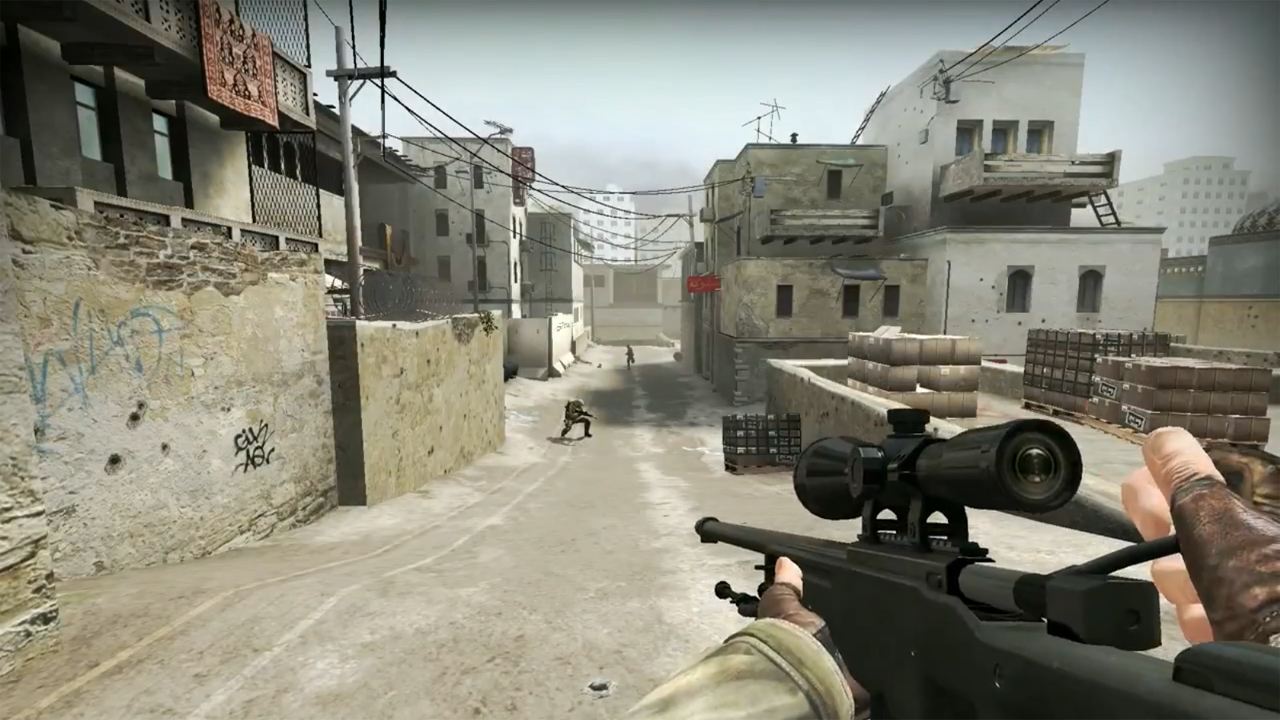
Image result for counter-strike global offensive
Above is a player using the dreaded AWP.

For those of you unaware, Counter-Strike is a series of tactical FPS games with a competitive scene that has garnered massive amounts of attention. The first game in the franchise was as a mod of the original Half-Life, and the rights to the game were purchased by Valve, the developers of Half-Life, leading to multiple sequels including the most recent entry, Global Offensive.

In a standard match, there is a team of terrorists and a team of counter terrorists. The terrorists must plant and detonate a bomb at one of two sites and the CTs must prevent them from activating it. Once a player dies, they're out of the round. The round ends if all of the players on one team are eliminated, if the bomb is detonated, or if the bomb is defused after being planted. After every round, players are awarded a certain amount of money based on whether they won the previous round and how many enemies they killed and can then buy weapons or gear such as armor that can protect you from additional bullets or a defuse kit (for CTs only) that can deactivate the bomb faster. This setup allows for some of the most tense gameplay you will likely ever experience while playing a shooter.

It's worth noting that CS: GO plays nothing like the vast majority of modern shooters; there's no sprinting, no regenerating health, most of the weapons don't have aim-down sights, and some small arms won't kill with a single headshot. But don't let any of this fool you -- you can be dispatched just as easily if not more so than you can be in other titles in the genre. Additionally, the recoil patterns of most weapons are exaggerated to the point of unrealism, meaning that you are absolutely required to fire in short, controlled bursts to hit targets at medium range or longer. I've often been killed in close-range battles in which I held down the trigger on an automatic weapon only to find I only landed one or two hits. This is a mild but somewhat frequent frustration that I'll never truly get used to.

New modes have been added to this edition of CS that add a fair amount of replay value. These include Team Deathmatch, an interesting take on the traditional gamemode that awards different amounts of points based on the strength of the weapons you use; Arms Race, in which you earn increasingly more powerful weapons as you get more kills and undo the progress of enemies by killing them using the knife; and Demolition, a fast-paced twist on the traditional bomb scenario in which you play on small maps and earn stronger weapons as you take out more enemies as opposed to buying your own gear. Demolition follows the same die-and-you're-out format as Casual / Competitive, meaning there are no respawns. TDM and Arms Race, however, do feature respawning, and although those modes are mostly enjoyable, the spawn points are absolutely dreadful. I'd often get placed directly in the line of fine of enemies and sometimes would even respawn partially trapped inside a ceiling, immobilizing me. This would force me to either wait to be killed and sacrifice my spot on the leaderboard or switch teams in order to respawn instantly and maintain my score. Unsurprisingly, the latter was almost guaranteed to irritate my (former) teammates. A matchmaking system has been implemented for the official gamemodes, but a community server browser is also available.

Global Offensive's overall balance is solid, but some weapons and maps are questionably designed. A few maps place the spawn point of one team closer to the objectives than the other, and a few weapons seem disproportionately priced. For example, the Negev and the M249 are priced at $2,000 and $5,400 respectively despite having similar stats. I've also experienced countless one-hit deaths at the hands of users of the AWP, an incredibly powerful bolt-action sniper rfile.

CS:GO may have some frustrations, but its excellent tension make it a easy to recommend to anyone seeking a hardcore FPS experience.

Ups
Gameplay is very tense
Multiple gamemodes
Steam Workshop support
Matchmaking and server browser

Downs
Minor balance issues
Frustrating recoil patterns
THE AWP KILLS WITH ONE BODY SHOT


Also available on Xbox 360, Xbox One, and PlayStation 3

The System Difference: The console versions of CS: GO have only been updated several times since its release. The PC version features more maps, modes, and weapons, as well as Steam Workshop support which allows for easy access to user-generated content.

ESRB: M (PARENTAL WARNING: This game contains large amounts of realistic blood) Content: Blood and Intense Violence Price: $14.99 (Download)

Tuesday, March 14, 2017

Just Cause Review

Just Cause
Publisher: Square Enix Developer: Avalanche Studios Platform: PC Release: 2006 Players: 1 Genre: Third-Person Shooter / Sandbox Rating: 7.2 \ 10.0: Good
Above is Rico in a speedy, motion-blurry pursuit with the policia.

Just Cause has become a series renowned for its massive open worlds and explosive action that would leave Micheal Bay impressed. The developers, Avalanche Studios, have become full on triple-A developers thanks to their series of summer blockbuster simulators, but they had humble beginnings.

Anyone familiar with this franchise will not be surprised by the plot; The tyrannical Salvador Mendoza, a man believed to be in possession of weapons of mass destruction, has taken over the fictional South American island nation of San Esperito.  Because of this, Rico Rodriguez, who has now become a staple of the series, is sent to the country to aid the rebels who reside there in overthrowing Mendoza and to take out the president's corrupt government officials. This gives the title of the game an often overlooked double meaning, as "Just Cause" can be interpreted as Rico's actions being honorable or as a shortened version of "Just because", the perfect answer as to why you a do any of the over-the-top things the game allows you to.

Those who have played later games in the series but not this one may take while to adjust to the gameplay. Many of the major elements of games to come are still present -- the massive game map is littered with races, side-quests, and villages to liberate. However, the game itself plays much differently, mostly due to the less fleshed-out stunt system. This game's grappling hook is still fun to use, but it can only latch onto vehicles, meaning that travelling by using the parachute and hook as many players did in JC2 is not possible. Thankfully, you're able to request a vehicle drop at your location whenever you're not in a pursuit. As you liberate more villages and bases, more vehicles become unlocked. My biggest issue with the unarmed vehicles in the game is that you can't use weapons while you're riding on top of them, making on-road vehicular combat needlessly frustrating. While in pursuits, I often had to abandon my car every several minutes and climb into a police or military one due to taking significant damage because I was unable to defend myself without heavily reducing my mobility.

Liberating settlements also works quite differently then it did in later games. You start a liberation by speaking to the rebel or gang member outside the settlement, and both sides will immediately begin to call in reinforcements. There are three barricades that must be destroyed in every settlement (that are really easy to get around and could hardly be considered barricades, but "logic" and Just Cause are an oxymoron), and the enemies will suddenly disappear once you either capture the flag or take out a gang leader depending on which type of settlement you're overthrowing. These battles feel incredibly intense due to the large number of NPCs. I was frequently getting hit by bullets I had no hope of avoiding, but this was never too much of an issue since enemies will occasionally drop medkits upon defeat. The scale of these shootouts is impressive, and the number of weapons dropped by combatants on the ground that I would see in the aftermath of liberations never failed to impress me. This game was released before the open-world shooter formula was refined, and the game can sometimes feel even more repetitious than modern Ubisoft titles, and if you don't enjoy those types of games, you certainly won't enjoy this one. However, I don't mind very much when the repetitious activities are so entertaining.

It's difficult to notice that this game's AI opponents don't live up to the "intelligence" part of the acronym when you're fighting them on foot in large groups, but things get ugly when vehicles are involved. You'll often see massive pileups of cars in the middle of villages after liberating them, and the enemies are just as reckless on the open road. They would frequently ram me off of cliffs and took themselves down with me, and would also often run into lampposts and trees. The enemies don't cease their stupidity while airborne, either; the helicopter pilots may be able to shoot you from incredible distances even through thick trees and vegetation, but they usually stay still and will never attempt to avoid your gunfire when you're on foot, making them incredibly easy targets if you've got a rocket launcher equipped.

As for the campaign missions, they're okay, but mostly forgettable. There are a few fairly fun moments I can recall, but what I most remember are the numerous glitches I came across and frustrations that arose from them and the ludicrous saving system. Some of the more notable bugs I ran into were when tanks tumbled around uncontrollably when I drove them, triggered explosives bouncing across the ground when I deployed them, objective items disappearing upon retrying levels, and the game instantly crashing on PC if the game was in anyway minimized. I once accidentally pressed the Windows key while piloting a helicopter when I meant to lower the vehicle by holding the nearby CTRL key. As a result, the game crashed and I lost nearly half an hour of progress. (This apparently doesn't affect Windows XP users, but if you own a PC running an operating system from 2001, it's probably factory-built and has no hope of smoothly running this game) "Why didn't you just manually save?" you might be asking. Well, the only way to save your progress in Just Cause is via prompts that appear when you complete a campaign mission or if you use a control panel at one of the safehouses you unlock as you liberate San Esperito. This combined with the inability to start the game up from mission checkpoints caused me to become stuck for long periods of time on some segments of the game.

Just Cause is one of the most polarizing games I've played in awhile. The gameplay has thrilling highs and extremely frustrating lows; the islands are densely packed with well-detailed vegetation and foliage, but the FMV cutscenes are grainy and ugly; the flamenco soundtrack does wonders to accentuate the action, but the voice acting is hilariously bad. The game may have many shortcomings, but they are ultimately overshadowed by the often entertaining action. It's far from a masterpiece, but it's worth checking out if you want to kill time with some open-world silliness.

Ups
Impressively large-scale battles
Beautiful visuals (for the time)
Fantastic flamenco soundtrack
Clever title
Hilariously idiotic A.I

Downs
Horrible cut-scenes and voice acting
Repetitive tasks
Frustrating save system and glitches
Hilariously idiotic A.I.

Also available on Xbox, Xbox 360, and PlayStation 2

ESRB: M (PARENTAL WARNING: This game contains intense violence, suggestive content, some swearing, and drug references) Content: Blood, Drug Reference, Language, Intense Violence, and Suggestive Content Price: $6.99 (Retail / Download)

Wednesday, March 1, 2017

5th Anniversary Post

It's Told You So Review's 5th Birthday!

I'm publishing this post in celebration of my blog's five, albeit belated anniversary! Since the day I created this blog, I've published 105 posts, received 23,505 pageviews, received 125 comments (my replies among them), and been followed by 11 people (my two Google accounts included)! This wasn't my greatest year, but I did add quite a few new features. I know this may be disapointing to hear, but expect even less reviews in 2017 than last year. I've been working hard to make sure my reviews are as detailed, thorough, and reliable as possible, and that can take quite awhile. Be sure to keep commenting and checking out my blog, and maybe become a follower! Thanks!