Welcome!

Are you a gamer? Want semi-expert opinions on new and old games both popular and overlooked? Then this site is right for you!

Tuesday, October 17, 2017

The Legend of Zelda: Breath of the Wild Review

The Legend of Zelda: Breath of the Wild
Publisher: Nintendo Developer: Nintendo Platform: Nintendo Switch Release: 2017 Genre: RPG / Sandbox Rating: 9.4 \ 10.0: Excellent
Image result for botw
Above is Link raiding a Bokoblin camp.

For years, the Legend of Zelda series has remained one of the most celebrated and respected franchises in gaming. The 3D entries in the saga have all been nearly universally acclaimed by critics (although 2011's Skyward Sword had a mixed reception by fans), but these games have fallen into a predictable pattern over the years. The plots may be original, but the progression has always involved travelling from linear dungeon to linear dungeon to acquire items that are only useful in several specific areas. The Legend of Zelda: Breath of the Wild aims to break this cycle, and it has done so excellently.

Breath of the Wild presents an interesting new story that complicates the Zelda timeline further by having evidence to suggest that it could be part of any of any of the three post-Ocarina of Time timelines. It begins with Link being told to awaken by a disembodied voice. He arises from a chamber, unarmed and unarmored. He then retrieves a tablet that resembles a Switch console from a pedestal and exits the chamber. He spots an hooded man nearby. He leads Link to the top of a massive tower, then instructs him to visit the four shrines scattered throughout valley which happens to be located atop a massive wall. Each of these shrines introduces one of the four abilities that can be used by the Shiekah Slate, the aforementioned tablet. These are the ability to use manually detonated sphere or cube-shaped bombs; magnesis, which allows you to move metal objects with ease; stasis, which can be used to temporarily freeze objects in place and repeatedly hit them in order to build up potential energy that will become kinetic energy once the effect expires; and cryonis, which allows you to generate pillars of ice on the surface of bodies of water.

After doing this, the old man will grant you his paraglider and reveal that he is actually the ghost of the previous king of Hyrule. He explains that Link was gravely wounded when Calamity Ganon awoke and wreaked havoc upon Hyrule, and had to be revived by being frozen in time inside the Shrine of Resurrection, which wiped his memory completely, has been asleep for 100 years. He has been awoken to defeat Calamity Ganon, an evil force that has been contained inside the ruins of Hyrule Castle by Zelda ever since he took control of the many robotic Guardians that once defended Hyrule. Calamity Ganon's four elemental forms also possessed the four Divine Beasts,  massive mechanical animals that were created in preparation for Ganon's return, and trapped the spirits of their pilots within. Ganon has nearly broken free from the barrier surrounding the castle, and the consequences of his escape would be catastrophic. It's up to Link to free the Divine Beasts from Ganon's influence and recover his memories -- or you could just head straight to Hyrule Castle. Sure, you'll get killed in a single hit by every occupant of the castle and break a full inventory's worth of the weapons that you'll have at the time before even coming close to killing several of those enemies, but the game won't stop you. Every other activity is entirely optional and only serves to prepare you for your confrontation with Calamity Ganon. Liberating the Divine Beasts will allow their pilots to assist you in the final battle; completing shrines will earn you Spirit Orbs that can be exchanged for health and stamina upgrades; and collecting Korok seeds will allow you to increase your weapon, bow, and shield storage.

If these activities sound too plentiful for a traditional Zelda world, that's because they are; Breath of the Wild is the first fully open-world title in the series. Discovering every shrine will be the main goal of adventurous players as they explore the overworld. Each of them serves as a mini-dungeon with either a puzzle or combat trial. These ramp up in difficulty as you travel further from where you started, and although there is a intended manner in which each puzzle is meant to be completed, there are often multiple unintended solutions and shortcuts that brought a grin to my face when I discovered them (Tip: Metal weapons and yellow Chu Chu jelly can be used to complete circuits). There are 120 of these scattered throughout the world. Most can be found just by exploring thanks to a handy shrine detector on your HUD, but some appear after completing a riddle or side quest. A handful of the game's side quests are fantastic and tell small but memorable stories, but a large number are sadly generic fetch quests, and some even simply involve giving a character a certain number of an item that you are very likely to already have on hand.

One of the strongest aspects of Breath of the Wild is its combat. It still retains the targeting and dodging system that has been present in every mainline 3D Zelda title, but has tweaked it to emphasize proper timing when the action is intense and makes stealth a viable option for players who want to slowly and carefully raid camps and rewards thinking outside the box. There are two major additions to melee combat: Parrying is performed by pressing A while holding a shield, and doing this the moment an enemy attacks will cause them to stumble, leaving them open for a beating; dodging right before an enemy's melee attack hits you will cause time to slow down, and you'll be prompted to execute a flurried rush, an uninterruptible string of attacks that lasts several seconds; and if you silently approach an enemy from behind, you can deal a devastating blow that deals eight times the normal damage of the weapon you use, and careful players can wipe out an entire enemy camp one single-hit kill at a time without anyone knowing you were ever there. Mastering these moves is essential for taking down some of Link's tougher foes. BotW also boasts the most expansive arsenal of weapons in the Zelda series to date; there are boomerangs, bows, claymores, clubs, magic staffs, spears, swords, and more, and each weapon type has a unique charged attack. Link's archery abilities have been expanded as well; you're no longer restricted to standing still while taking aim, and he can even slow down time temporarily by drawing his bow in midair.

The swordplay itself is fantastic, but it is involved in one of the game's most controversial features: weapon durability. After landing a certain number of hits with a weapon, you will be notified that it is badly damaged, meaning that a handful of hits more will shatter it. I remember being excited as I discovered powerful new weapons early in my adventure only to realize that they would soon be gone. Because I exchanged most of the Korok seeds I discovered for weapon storage upgrades, I eventually ended up with so many Royal Claymores and elemental blades that they became expendable, but this took far too many hours to be worth the disappointment that breaking powerful weapons caused early on.

As you explore Hyrule you'll inevitably encounter Guardians, the aforementioned automatons that have been possessed by Ganon. These mechanical beasts can shoot an incredibly powerful laser from their one eye that can kill even the . They pose a massive threat a first, and new players will learn either to run from them or, without ruining the surprise of finding out, how to make great use of a pot lid. One of the most satisfying parts of my experience was gaining the courage to face a Guardian and severing the metal giant's legs one by then and finishing off its immobilized body.

In terms of presentation, Breath of the Wild is stellar in some areas but inconsistent overall. The game's art style is a massive positive; like Skyward Sword before it, it strikes a perfect balance between Wind Waker's cartoonishness and Twilight Princess's realism while having an incredible attention to detail that wasn't possible on the Wii. Blades or grass are pushed apart by Link's footsteps, clusters of fallen leaves shift around as Link swims through ponds, and wind pushes the sparks from fire; this comes at a cost however, as the framerate will often drop significantly, albeit briefly, when there are large amounts of fire onscreen, but experiences constant low framerates in certain areas such as deep in the Faron jungles and in the heart of the Lost Woods. Additionally, this is is the only first party Switch title thus far to run at a locked 30 FPS, although this is most likely due to the Switch being a quickly made port of a game that was originally made to be an exclusive for significantly weaker hardware. The soundtrack is incredible for the most part, but disappointing at times. The subtle piano tracks that play during exploration in combination with the ambient sounds sometimes alleviates the atmosphere to great heights, but these tracks simply cannot compete with the likes of Twilight Princess's Hyrule Field Theme and Wind Waker's sailing theme. Outside of exploration, however, the soundtracks shines. The themes for each town as well as the various combat themes elevate the soundtrack to the quality standard set by the rest of the series.

Aside form the fully open world structure, the most notable deviation from the Zelda series' traditions is the addition of voice acting. Text boxes with sound effects are still used during gameplay, but important cutscenes are now fully voiced. Some of the voice performances are good, but many are of questionable quality (most notably Princess Mipha). This is a step in the right direction for this series, but compared to past acting acting in Nintendo games such as Kid Icarus: Uprising and the Fire Emblem games, BotW is disappointing.

Overall, The Legend of Zelda: Breath of the Wild is an incredible game. It has a handful of insignificant flaws, but those do little to detract from its engaging exploration, interesting story, and stunning presentation. It's a must have for anyone seeking a fresh Zelda experience or exciting opne world antics and is a great reason to get your hands on a Switch.

Ups
Incredible art style and soundtrack
Subtle references to past Zelda games
Immersive exploration
Flexible puzzle solutions
Numerous secrets and easter eggs
Incredible sense of freedom

Downs
Weapon durability devalues loot
Some boring and uninteresting side quests
Some underwhelming voice acting performances
Occasional framerate drops

Also available on Wii U

The System Difference: In terms of gameplay and visuals, both versions of BotW are identical. The added portability of the Switch version made my wait to get the console well worth it.

ESRB: E10+ Content: Fantasy Violence, Mild Suggestive Themes, and Use of Alcohol Price: $59.99 (Retail / Download)

Monday, July 10, 2017

Counter-Strike: Global Offensive Review

Counter-Strike: Global Offensive
Publisher: Valve Developer: Valve Platform: PC Release: 2012 Players: 1-20 (Casual / Public), 10 (Competitive) Genre: First-Person Shooter / Strategy Rating: 8.4 \ 10.0: Great
Image result for counter-strike global offensive
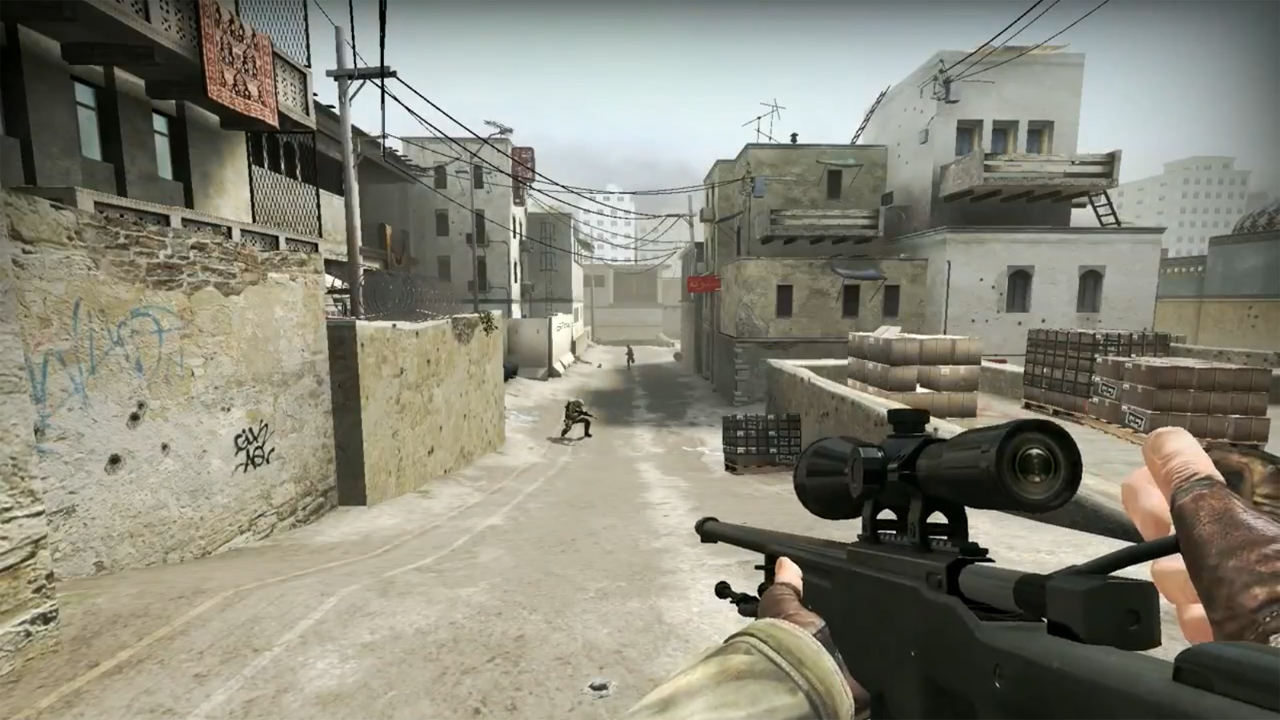
Above is a player using the dreaded AWP.

For those of you unaware, Counter-Strike is a series of tactical FPS games with a competitive scene that has garnered massive amounts of attention. The first game in the franchise was as a mod of the original Half-Life, and the rights to the game were purchased by Valve, the developers of Half-Life, leading to multiple sequels including the most recent entry, Global Offensive.

In a standard match, there is a team of terrorists and a team of counter terrorists. The terrorists must plant and detonate a bomb at one of two sites and the CTs must prevent them from activating it. Once a player dies, they're out of the round. The round ends if all of the players on one team are eliminated, if the bomb is detonated, or if the bomb is defused after being planted. After every round, players are awarded a certain amount of money based on whether they won the previous round and how many enemies they killed and can then buy weapons or gear such as armor that can protect you from additional bullets or a defuse kit (for CTs only) that can deactivate the bomb faster. This setup allows for some of the most tense gameplay you will likely ever experience while playing a shooter.

It's worth noting that CS: GO plays nothing like the vast majority of modern shooters; there's no sprinting, no regenerating health, most of the weapons don't have aim-down sights, and some small arms won't kill with a single headshot. But don't let any of this fool you -- you can be dispatched just as easily if not more so than you can be in other titles in the genre. Additionally, the recoil patterns of most weapons are exaggerated to the point of unrealism, meaning that you are absolutely required to fire in short, controlled bursts to hit targets at medium range or longer. I've often been killed in close-range battles in which I held down the trigger on an automatic weapon only to find I only landed one or two hits. This is a mild but somewhat frequent frustration that I'll never truly get used to.

New modes have been added to this edition of CS that add a fair amount of replay value. These include Team Deathmatch, an interesting take on the traditional gamemode that awards different amounts of points based on the strength of the weapons you use; Arms Race, in which you earn increasingly more powerful weapons as you get more kills and undo the progress of enemies by killing them using the knife; and Demolition, a fast-paced twist on the traditional bomb scenario in which you play on small maps and earn stronger weapons as you take out more enemies as opposed to buying your own gear. Demolition follows the same die-and-you're-out format as Casual / Competitive, meaning there are no respawns. TDM and Arms Race, however, do feature respawning, and although those modes are mostly enjoyable, the spawn points are absolutely dreadful. I'd often get placed directly in the line of fine of enemies and sometimes would even respawn partially trapped inside a ceiling, immobilizing me. This would force me to either wait to be killed and sacrifice my spot on the leaderboard or switch teams in order to respawn instantly and maintain my score. Unsurprisingly, the latter was almost guaranteed to irritate my (former) teammates. A matchmaking system has been implemented for the official gamemodes, but a community server browser is also available.

Global Offensive's overall balance is solid, but some weapons and maps are questionably designed. A few maps place the spawn point of one team closer to the objectives than the other, and a few weapons seem disproportionately priced. For example, the Negev and the M249 are priced at $2,000 and $5,400 respectively despite having similar stats. I've also experienced countless one-hit deaths at the hands of users of the AWP, an incredibly powerful bolt-action sniper rfile.

CS:GO may have some frustrations, but its excellent tension make it a easy to recommend to anyone seeking a hardcore FPS experience.

Ups
Gameplay is very tense
Multiple gamemodes
Steam Workshop support
Matchmaking and server browser

Downs
Minor balance issues
Frustrating recoil patterns
THE AWP KILLS WITH ONE BODY SHOT


Also available on Xbox 360, Xbox One, and PlayStation 3

The System Difference: The console versions of CS: GO have only been updated several times since its release. The PC version features more maps, modes, and weapons, as well as Steam Workshop support which allows for easy access to user-generated content.

ESRB: M (PARENTAL WARNING: This game contains large amounts of realistic blood) Content: Blood and Intense Violence Price: $14.99 (Download)

Tuesday, March 14, 2017

Just Cause Review

Just Cause
Publisher: Square Enix Developer: Avalanche Studios Platform: PC Release: 2006 Players: Genre: Third-Person Shooter / Sandbox Rating: 7.2 \ 10.0: Good
Above is Rico in a speedy, motion-blurry pursuit with the policia.

Just Cause has become a series renowned for its massive open worlds and explosive action that would leave Micheal Bay impressed. The developers, Avalanche Studios, have become full on triple-A developers thanks to their series of summer blockbuster simulators, but they had humble beginnings.

Anyone familiar with this franchise will not be surprised by the plot; The tyrannical Salvador Mendoza, a man believed to be in possession of weapons of mass destruction, has taken over the fictional South American island nation of San Esperito.  Because of this, Rico Rodriguez, who has now become a staple of the series, is sent to the country to aid the rebels who reside there in overthrowing Mendoza and to take out the president's corrupt government officials. This gives the title of the game an often overlooked double meaning, as "Just Cause" can be interpreted as Rico's actions being honorable or as a shortened version of "Just because", the perfect answer as to why you a do any of the over-the-top things the game allows you to.

Those who have played later games in the series but not this one may take while to adjust to the gameplay. Many of the major elements of games to come are still present -- the massive game map is littered with races, side-quests, and villages to liberate. However, the game itself plays much differently, mostly due to the less fleshed-out stunt system. This game's grappling hook is still fun to use, but it can only latch onto vehicles, meaning that travelling by using the parachute and hook as many players did in JC2 is not possible. Thankfully, you're able to request a vehicle drop at your location whenever you're not in a pursuit. As you liberate more villages and bases, more vehicles become unlocked. My biggest issue with the unarmed vehicles in the game is that you can't use weapons while you're riding on top of them, making on-road vehicular combat needlessly frustrating. While in pursuits, I often had to abandon my car every several minutes and climb into a police or military one due to taking significant damage because I was unable to defend myself without heavily reducing my mobility.

Liberating settlements also works quite differently then it did in later games. You start a liberation by speaking to the rebel or gang member outside the settlement, and both sides will immediately begin to call in reinforcements. There are three barricades that must be destroyed in every settlement (that are really easy to get around and could hardly be considered barricades, but "logic" and Just Cause are an oxymoron), and the enemies will suddenly disappear once you either capture the flag or take out a gang leader depending on which type of settlement you're overthrowing. These battles feel incredibly intense due to the large number of NPCs. I was frequently getting hit by bullets I had no hope of avoiding, but this was never too much of an issue since enemies will occasionally drop medkits upon defeat. The scale of these shootouts is impressive, and the number of weapons dropped by combatants on the ground that I would see in the aftermath of liberations never failed to impress me. This game was released before the open-world shooter formula was refined, and the game can sometimes feel even more repetitious than modern Ubisoft titles, and if you don't enjoy those types of games, you certainly won't enjoy this one. However, I don't mind very much when the repetitious activities are so entertaining.

It's difficult to notice that this game's AI opponents don't live up to the "intelligence" part of the acronym when you're fighting them on foot in large groups, but things get ugly when vehicles are involved. You'll often see massive pileups of cars in the middle of villages after liberating them, and the enemies are just as reckless on the open road. They would frequently ram me off of cliffs and took themselves down with me, and would also often run into lampposts and trees. The enemies don't cease their stupidity while airborne, either; the helicopter pilots may be able to shoot you from incredible distances even through thick trees and vegetation, but they usually stay still and will never attempt to avoid your gunfire when you're on foot, making them incredibly easy targets if you've got a rocket launcher equipped.

As for the campaign missions, they're okay, but mostly forgettable. There are a few fairly fun moments I can recall, but what I most remember are the numerous glitches I came across and frustrations that arose from them and the ludicrous saving system. Some of the more notable bugs I ran into were when tanks tumbled around uncontrollably when I drove them, triggered explosives bouncing across the ground when I deployed them, objective items disappearing upon retrying levels, and the game instantly crashing on PC if the game was in anyway minimized. I once accidentally pressed the Windows key while piloting a helicopter when I meant to lower the vehicle by holding the nearby CTRL key. As a result, the game crashed and I lost nearly half an hour of progress. (This apparently doesn't affect Windows XP users, but if you own a PC running an operating system from 2001, it's probably factory-built and has no hope of smoothly running this game) "Why didn't you just manually save?" you might be asking. Well, the only way to save your progress in Just Cause is via prompts that appear when you complete a campaign mission or if you use a control panel at one of the safehouses you unlock as you liberate San Esperito. This combined with the inability to start the game up from mission checkpoints caused me to become stuck for long periods of time on some segments of the game.

Just Cause is one of the most polarizing games I've played in awhile. The gameplay has thrilling highs and extremely frustrating lows; the islands are densely packed with well-detailed vegetation and foliage, but the FMV cutscenes are grainy and ugly; the flamenco soundtrack does wonders to accentuate the action, but the voice acting is hilariously bad. The game may have many shortcomings, but they are ultimately overshadowed by the often entertaining action. It's far from a masterpiece, but it's worth checking out if you want to kill time with some open-world silliness.

Ups
Impressively large-scale battles
Beautiful visuals (for the time)
Fantastic flamenco soundtrack
Clever title
Hilariously idiotic A.I

Downs
Horrible cut-scenes and voice acting
Repetitive tasks
Frustrating save system and glitches
Hilariously idiotic A.I.

Also available on Xbox, Xbox 360, and PlayStation 2

ESRB: M (PARENTAL WARNING: This game contains intense violence, suggestive content, some swearing, and drug references) Content: Blood, Drug Reference, Language, Intense Violence, and Suggestive Content Price: $6.99 (Retail / Download)

Wednesday, March 1, 2017

5th Anniversary Post

It's Told You So Review's 5th Birthday!

I'm publishing this post in celebration of my blog's five, albeit belated anniversary! Since the day I created this blog, I've published 105 posts, received 23,505 pageviews, received 125 comments (my replies among them), and been followed by 11 people (my two Google accounts included)! This wasn't my greatest year, but I did add quite a few new features. I know this may be disapointing to hear, but expect even less reviews in 2017 than last year. I've been working hard to make sure my reviews are as detailed, thorough, and reliable as possible, and that can take quite awhile. Be sure to keep commenting and checking out my blog, and maybe become a follower! Thanks!

Wednesday, February 15, 2017

Clash Royale Review

Clash Royale
Publisher: Supercell Developer: Supercell Platform: iOS Release: 2016 Players: 1 (Training), 2 (Online) Genre: Strategy / Action Rating: 8.3 \ 10.0: Great
Image result for clash royale gameplay
Above is a match in Area 1, Goblin Stadium

It's been a long time since I've played a mobile game that wasn't a port of a preexisting title that I found to be not just okay or good, but great. Clash Royale is one of those rare games. Any mobile gamer is very likely familiar with the name of its Supercell. They're the developers behind the hugely successful base-building strategy games Clash of Clans and Boom Beach, both of which are often rightfully accused of being very difficult to advance in without paying for microtransactions.

This spinoff of CoC abandons Supercell's consumer-unfriendly format in favor of a more simple concept: Two players draw cards to place troops on the battlefield in hopes of getting them to their opponents side and destroying their three towers. These cards cost a certain amount of elixir which you can only hold onto a limited amount of at once and slowly regenerates over time. At the end of each three-minute match,  the player who has destroyed more enemy towers wins. The match ends early if someone's primary tower is wrecked and goes into overtime if the game is tied, at which point the next person to wreck an enemy tower wins instantly.

After completing a very easy tutorial in which you battle against the A.I., you are given several cards to start off with and then must face others players. There are nearly 70 different cards you can collect and battle with including troops, buildings, and spells. Clash of Clans players will be familiar with many of these, such as the skeleton-summoning Witch, the Mr. T lookalike the Hog-Rider, the mighty cyborg-ninja known as P.E.K.K.A., and the fast-firing X-Bow. My favorite newcomers include the Musketeer, and markswoman armed with a long-range cannon; the Elite Barbarians, a pair of warriors that are stronger and speedier than the normal barbarians; and the Executioner, who is capable of hitting the same enemies multiple times by using his axe as a boomerang.

As with Clash of Clans, you gain trophies from winning battles and lose them when you're defeated. CoC's leagues have been substituted with ten arenas whose trophy requirements get higher and higher as you advance. Each arena has a variety of cards you can unlock from chests, which are also won from battle. This is where the free-to-play mechanics rear their ugly head; These chests contain cards and gold and take from three to 24 hours to unlock. If you collect enough duplicates of a card, you can upgrade it with gold. The higher the level of the card, the more duplicates and coins you need to upgrade it again. Upgrading cards earns you experience points, and leveling up increases the health of and damage dealt by your towers. These cards also vary in rarity; they can be common, rare, epic, or legendary. Rarity doesn't necessarily determine quality, but the legendaries tend to be the most unique. For example, the princess can attack towers from beyond their range, the Log is the only card that can knock back ground units, the Electro Wizard can attack two foes at once ... There are several other legendary cards, but they all possess qualities that more common cards don't.

It's worth mentioning that Supercell's traditional cartoony art style continues to charm, and the music, while not very varied, well suits the battles. The overtime music especially helps to make long-lasting matches suspenseful.

While "clan" may not be in the title, clans are still an integral part of the game. By joining one, you are able to request for cards every eight hours and donate unwanted duplicates in exchange for gold and EXP. You can also battle your clanmates for fun or for practice. If you ever want to test out a new deck, I'd strongly recommend battling a clanmate rather than the game's A.I. trainers which never seem to execute commonly used strategies and cannot properly prepare you for real matches. The most important part of being in a clan is participating in participating in the weekly Clan Chest event. Every week for three days, your clan must try extra and to desrtor towers in battle in order to level up a chest that opens when the three days are over. A frustrating aspect of the clan system is the lack of a global chat. This means that the only way to recruit people that you don't know personally is to invite
someone you see in a featured replay in the TV Royale section (or hope someone comes across your clan in the clan search.

One of the biggest challenges of Clash Royale is crafting a proper deck. Your deck is limited to eight cards that are shuffled at the start of each game and eventually cycle, and you can hold four in your hand at once. There are countless potential scenarios and statistics you must consider when making a deck, such as the average cost of the cards, how easily they can be countered by commonly used cards, whether they're able to counter other cards, and how many have low and high HP.

The game is fun and balanced for the most part, but sadly, no Supercell game is complete without pay to win elements. Users can purchase gems to pay for upgrades when they have insufficient gold or instantly unlock chests, as well as buy chests in the shop have a high chance of containing rarer cards. Because of this, I occasionally encountered players that were level 11, which requires an absurb amount of EXP, or who had level 3 legendary cards. To put this into perspective, I have played this game for dozens of hours and have only aquired four total legendary cards - two Miners and two Logs. Upgrading an individual legendary card to level 3 requires six.

Minor balance issues, frustrations , and mildy repetitive gameplay aside, Clash Royale is as well made and entertaining as a mobile game gets. Strategy fans will love it, and even if you dislike Supercell, it's definitely worth a shot.

Ups
Strategic gameplay
Great visuals and music
Tons of cards to collect
Clans are very helpful

Downs
Microtransactions mess with balance
Recruiting clanmates is difficult
Mildy repetitive gameplay


ESRB: N/A Content: N/A Price: $0.00 (Download)

Monday, November 14, 2016

Crysis Review

Crysis
Publisher: Electronic Arts Developer: Crytek Platform: PC Release: 2007 Players:Genre: First-Person Shooter / Sandbox Rating: 8.9 \ 10.0: Fantastic
Image result for crysis gameplay
Above is a military outpost being completely leveled.

In 2007, Crysis was released on PC and was received excellently. In addition to having solid gameplay that was unlike any FPS before it, the game wowed gamers and critics alike with its stunningly beautiful visuals. However, this meant that only the beefiest gaming rigs were able to run the game, and until it was ported to the Xbox 360 and PlayStation 3 in 2011, PC gamers obsessed over the question "Can it run Crysis?".

These days, more people remember the game more for its technical prowess than its gameplay, which begs the question: Is the game as fun as it is pretty?

Before I address this, let's discuss the plot; The game starts off onboard a plane from the perspective of the protagonist. While learning nothing but the code names of the soldiers surrounding him, Nomad (that's you) is told that the island they're about to infiltrate has been invaded by the North Korean military. Partway through their descent towards the island, Nomad is unexpectedly knocked off course and plummets into a river.

This is a decent setup, but I feel that the weak point of this game are its characters. I wanted badly to be able to care about these characters, and they were unable to prove that they were anything more than generic soldiers before (minor spoiler alert) two of them are killed off. Even Nomad himself is completely forgettable. You could argue that a character Halo's iconic Master Chief, another faceless marines in power armor was no less bland in his debut title, but he was shown to have an interesting backstory and actually displays emotion in more recent games. Nomad, however doesn't even appear in future Crysis games. However, there are likely few other people that feel this way, and the story's shortcomings do little to diminish the game's overall quality.

To answer the question from earlier, Crysis still plays as well as it looks. Progression is linear, but the island setting allows for stealth as well as as explosive battles. Helping to allow for variety is Nomad's nanosuit. This high-tech getup allows him to generate an extra layer of armor to absorb damage, make himself nearly invisible, sprint lightning-fast, jump incredibly high, and have superhuman strength. Using these abilities consume's energy, and managing it is crucial to surviving. While both your health and energy can regenerate, don't think that makes this an easy game. Even on normal difficulty, Nomad can be taken down with a realistically small number of bullets when unarmored, so don't try playing this game like you would Call of Duty. Adding further depth is the ability to customize weapons in real time. There are several sights and attachments that you can apply after collecting them, and you can also add a laser pointer or flashlight, change the firing pattern, or even sometimes swap the ammunition of most weapons. When I first got tired of going into each encounter guns blazing, I thought that I'd be unable to attack from long range. I then had a lightbulb moment and equipped an assault rifle, slapped on a sniper scope, set it to semi-automatic, loaded it with incendiary ammo, and added a tactical attachment that supplied me with an infinite amount of tranquilizer darts, then cloaked and picked off enemies from afar one by one without being detected. That's not to say that the more action-packed approach isn't just as entertaining -- charging towards a group of enemies and grabbing one of them with super strength with one hand and shooting the rest with the other is just as satisfying, and witnessing rubble fly as mounted gunners tore through small buildings was exhilarating. It is a bit disappointing, however, when you're forced to take the action-oriented route in certain setpiece moments. Additionally, the various vehicles you can operate, despite being equipped with powerful turrets, are often nearly destroyed in seconds, which is a real shame since shooters that allow you to use vehicles in unscripted sequences are scarce these days. The controls can also be a bit awkward on console -- I found my self accidentally switching to weapons unintentionally because the weapon wheel and "switch to previous weapon" are both mapped to the same button. This is just a nitpick, and due to the large amount of keys the game uses on PC, I was still very impressed that all of the vital commands were crammed onto a controller (leaning was sadly excluded).

I mentioned how amazing Crysis looked earlier, but the game looks so darn good that it's difficult to overstate. Everything from the water to the foilage to the trees left me in awe, and the mission in which you board an alien ship is just as stunning as the coasts and jungles. I am a firm believer in the idea that gameplay is far more important than graphics, but I have little doubt that you'll be impressed by this game. Crysis obviously has lower texture detail on the 360 and PS3 and the draw distance is a bit short, but it is still easily one of the best looking games on the seventh-generation consoles.

The first two thirds of Crysis are fantastic, but the missions that follow the defeat of the general you came to the island to take out are lackluster by comparison. All the aforementioned freedom is mostly gone, and the enemy soldiers are replaced by the flying tentacled Ceph aliens that are briefly seen effortlessly dispatching troops several times prior. While this isn't necessarily bad, it's a pretty dramatic change in gameplay. The final boss, however, isn't enjoyable at all and lasts for what seems like forever even once you figure out its attack pattern (and some PC player have even reported that the boss was unkillable in their copy).

Crysis may not be a perfect game, but the the majority of it was incredibly enjoyable. Regardless of its issues, I can't recommenced it enough to anyone itching to play a unique FPS.

Ups
Tons of freedom in combat (for the most part)
Nanosuit abilities add strategy
On the fly weapon customization I've rarely seen in other games
Amazing visuals

Downs
Complete lack of character development
Lackluster final few missions
Occasional performance issues
Vehicles are near-useless

The System Difference: Graphics fanatics will obviously want to pick up the PC version of Crysis if they have an able gaming rig. However, if you're more concerned with performance, then you're out of luck, as even high end PC users reportedly have experienced framerate issues, which is the fault of the game and  not hardware. I have a GTX 1070 graphics card with 8 GB of video memory which massively surpasses the game's hardware issues and was able to run the game fine fro the most part. Bizarrely, the vertical sync settings locked my framerate to 50 6PS despite my monitor supporting 60 FPS, but this didn't bother me. What did bother me is that the framerate briefly dropped below 30 FPS in the most intense battle in the game and didn't exceed the low 40s to mid 30s range until the mission was over. As for the console version, I  encountered some bizarre bugs on the 360 such as wreckage of houses floating in midair and soldiers being unable to stop using mounted guns, but there was nothing game-breaking. Last but certainly not least, the mission Ascension in which you control a helicopter is surprisingly absent from the console version, possibly due to it often being regarded as the worst segment of the game.

Also available on Xbox 360 and PlayStation 3

ESRB: M (PARENTAL WARNING: This game contains intense violence, strong language, and moderate amounts of realistic blood) Content: Blood, Strong Language, and Violence Price $19.99 (Download)

Thursday, September 8, 2016

Kirby: Planet Robobot Review

Kirby: Planet Robobot
Publisher: Nintendo Developer: HAL Laboratory Platform: 3DS Players: 1 (Story, Arena, MKR, K3DR), 1-4 (TKC) Release: 2016 Genre: 2D Platformer / Action Rating: 8.7 \ 10: Fantastic
Image result for kirby planet robobot gameplay
Above is Kirby battling a boss in the Robobot armor.

Kirby: Planet Robobot isn't a particularly unique game. It doesn't do much to differentiate itself from its predecessoors, but it does surpass the games that came before it in one way: It manages to be one of the most consistently fun platformers I've played in quite awhile. If you're in search of a deep plot, you'll want to avoid a large number of Nintendo games, but there is a tad bit more complexity here than in previous Kirby titles; Everything is well and good on Kirby's homeworld Pop Star until a fleet of alien ships arrive and start to industrialize the entire planet. Unsurprisingly, it's up to Kirby to defeat the head of this operation and restore peace to Pop Star.

Gameplay wise, Planet Robobot is hardly distinguishable from Triple Deluxe before it. As you might expect, the game plays like a combination of Kirby's Adventure and Kirby Super Star with a few neat twists including new copy abilities, creative sequences where you jump between the foreground and background of a level (just like Triple Deluxe), and the all new Robobot armor. This powerful suit doesn't appear in every stage, but when it does, it's an absolute blast to use. Just like Kirby, the armor is able to scan enemies and absorb their abilities, making the machine practically unstoppable. These power trip sections are in my opinion more fun then the Hypernova and Super Ability sections from previous games in the series due to armor abilities which add a lot for variety and a larger number of puzzles and increased interactivity. Wreaking havoc with the aforementioned power ups in the previous games was fun, but you often caused all the destruction with very little input and mostly watched the chaos unfold. With the Robobot suit, overcoming the obstacles that lie before you hardly ever involves simply holding down a button or watching a cutscene unfold life before. Whether or not you're using the Robobot, the levels are as entertaining and creatively designed as ever.

As I said before, KPR includes some fun new Copy abilities. These include Doctor, which equips Kirby with deadly pills and syringes (Rated E for Everyone!); ESP, an ability inspired by Ness from Earthbound which enables you to control a deadly ball of energy using telekinesis; and my personal favorite, Poison, which grants you the power to spew and surf on lethal purple liquid and breathe out small toxic clouds. While these new abilities are great, two of my favorites from Triple Deluxe, Beetle and Bell, have sadly not returned.

Presentation wise, this is easily one of the strongest games in the franchise. Industrial-themed areas usually look incredibly dull, but Planet Robobot uses this theme to its advantage by adding adorable cyborg enemies and colorful areas amidst the metal and machines, making for a game that looks fantastic by 3DS standards. It's also well worth mentioning that Robobot easily has one of the best soundtracks in the series so far, which is quite a feat. The score features tons of catchy new tunes that span a decent number of genres, as well as plenty of excellent rearrangements of old fan favorites. The references to the series's past don't appear exclusively in the music, either -- there are also numerous references to Kirby's Dream Land 2 and Kirby Super Star which I won't spoil here which are sure to bring a grin to the faces of longtime fans.

In addition to the main story, the game also features a few other modes that can be unlocked. The first of these is Team Kirby Clash, a co-op RPG-lite mode in which you battle bosses using one of four Copy abilities with a team of AI or human-controlled Kirbys. While the mode is plenty of fun, the progression is shallow, and there isn't much replay value. Next up is Kirby 3D Rumble, a brief but entertaining top-down sub-game where you rack up combos by defeating enemies without taking damage. Two more modes are unlocked upon completing the adventure: The Arena and Meta Knight's Revenge. The Arena has barely changed at all since its previous iterations; You select your favorite Copy Ability and face every boss in the game with limited health items to use in between. In the Meta Knight's Revenge, you play through the main game as Kirby's frienemy Meta Knight. The prospect of playing through the game of the iconic antihero is made is better by the inclusion of several powerful moves that can be unleashed by collecting M-shaped coins.

As much as I enjoyed this game, there are a few issues that must be addressed. While the game runs at a very smooth 60 frames per second most of the time, I occasionally experienced brief slowdown (I played the game on both the original 3DS, and the New 3DS and there were no differences in performance despite the faster processor of the newer system). I was also mildly disappointed by how similar the game was to Triple Deluxe (as great as that game was), and it doesn't always feel like its own unique title.

Regardless of these minor issues, I highly recommend that any 3DS add this title to their library. It may not be very different from its predecessors, but any fan of the Kirby franchise is quite unlikely to be disappointed.

Ups
Creative level design
Robobot segments are great fun
Charming and detailed visuals
Fantastic music
Entertaining extra modes
Tons of fan service

Downs
Team Kirby Clash is fairly shallow
Occasional framerate drops
Too similar to Triple Deluxe

ESRB: E Content: Cartoon Violence Price: $39.99 (Retail / Download)